Advanced Technology / The Wand
At our Collegeville office, Dr. Nelly Silva uses The Wand® to meter anesthetic at a slow, steady rate, so getting numb feels calmer and more controlled.
Computer-controlled local anesthesia
The Wand is a computer-controlled system for delivering local anesthesia. In place of a hand-pushed syringe, a slim handpiece connects to a unit that meters every drop.
Much of the sting of a dental injection comes from anesthetic entering the tissue too fast, not from the needle tip. The Wand senses tissue pressure and keeps the flow even, releasing a little anesthetic just ahead of the tip so the area starts numbing right away.
A foot control starts and stops the flow. With no plunger to push, Dr. Silva's hand stays free to hold the handpiece steady and place it precisely.
For many treatments, The Wand can numb just the tooth being worked on. That can spare your lip, cheek and tongue from the heavy numbness of a wider injection.
Both deliver the same kind of local anesthetic. The difference is how it reaches the tissue and how much of your mouth goes numb.
| Traditional Syringe | The Wand® | |
|---|---|---|
| Flow Control | Pushed by hand, so speed and pressure vary | Metered by computer at a steady rate and pressure |
| What You See | A conventional dental syringe | A slim handpiece that looks more like a pen |
| Starting the Injection | Thumb pressure on a plunger | A foot control, leaving the hand free to steady the tip |
| Area That Goes Numb | Often a wide area, including lip and tongue for lower teeth | Can be limited to a single tooth for many treatments |
| Roof of the Mouth | Often the injection patients remember most | Slow, metered flow suits this dense tissue |
A good fit for many of our patients
If past injections are the reason you put off care, a slower delivery and a less clinical-looking handpiece can make the start of a visit easier.
A pen-like handpiece is far less intimidating than a syringe, which helps young patients in our pediatric care through a first filling.
A single-tooth injection can mean returning to work or a meeting without a numb lip or a lopsided smile.
Fillings, crowns, root canals and gum therapy all begin with local anesthesia, so The Wand can be part of many everyday visits.
Injections on the roof of the mouth are the ones many patients dread. Metered flow is designed for this firm, dense tissue.
Not every procedure suits a single-tooth injection. For wisdom teeth removal or severe anxiety, Dr. Silva may pair local anesthesia with conscious sedation.
The Wand changes how you get numb, not the treatment itself. Here is how a visit usually unfolds.
Tell us about past experiences with injections. Dr. Silva then decides whether The Wand, sedation or both suit your treatment.
The surface can be numbed first with a topical gel. The Wand then releases anesthetic ahead of the tip as the injection begins.
Most patients are numb within a few minutes. We confirm the tooth is fully numb before any work starts.
After a single-tooth injection, your lips and cheeks are often unaffected. Wait to chew until all feeling returns.

Dr. Silva earned her DMD at Temple University's Kornberg School of Dentistry, where she now teaches as a Clinical Associate Professor in Oral and Maxillofacial Pathology, Medicine and Surgery.
Her care includes conscious sedation and anxiety management, so The Wand is one part of a broader comfort plan. She invites patients to call her Nelly.
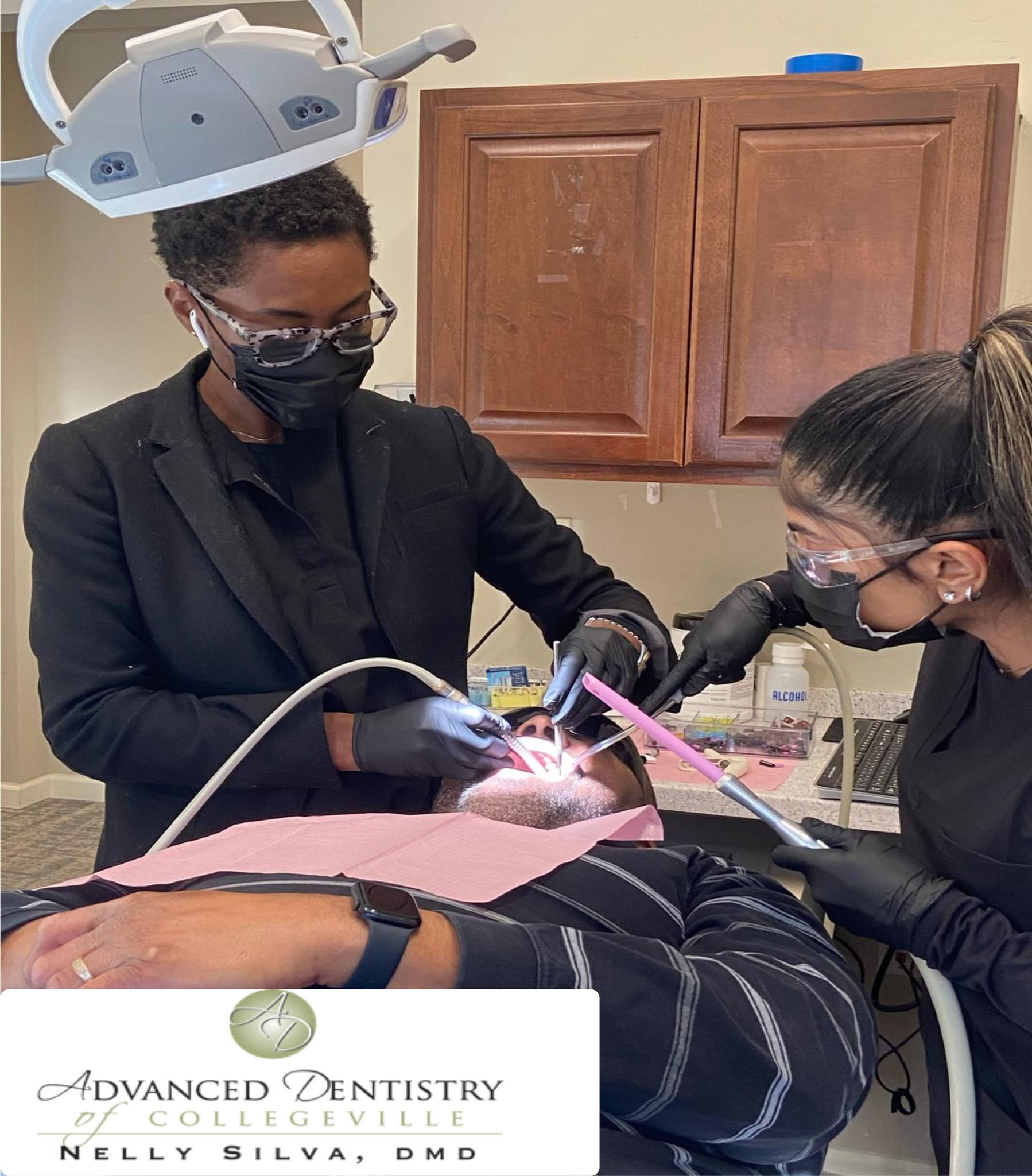
A patient shares his experience with our team.
They have made every visit a pain free experience.Jim F., Google Review
I also have dental anxiety and the atmosphere & team was super calming and eased my nerves.Liz A., Google Review
The Wand is part of the anesthesia for your treatment, so your cost depends on the procedure itself and your coverage.
We are in network with all PPO dental insurance plans. We do not accept Medicaid.
No dental insurance? Our in-office dental savings plan is an option worth asking about.
Payment plans are available, and we review your out-of-pocket estimate with you before treatment.
Straight answers about computer-controlled numbing, cost and comfort.
Book NowA dental wand is a computer-controlled device for delivering local anesthesia. The Wand system replaces the hand-pushed syringe with a slim, pen-like handpiece and meters the anesthetic at a slow, steady rate and pressure. At our office, Dr. Silva uses it to make numbing calmer for anxious and needle-sensitive patients.
Many patients find it more comfortable than a traditional injection, because the slow, even flow avoids the rush of pressure that causes stinging. You may still notice a slight pinch or pressure. When anxiety is the bigger obstacle, Dr. Silva can add conscious sedation.
The Wand is part of the local anesthesia for your treatment, not a separate procedure. Your cost depends on the treatment itself and your coverage. We accept all PPO dental plans and offer payment plans and a dental savings plan.
Local anesthesia numbs only the area being treated, and we deliver it with The Wand or a traditional syringe depending on the tooth and procedure. For patients with significant anxiety, Dr. Silva also provides conscious sedation. Your options are discussed during your visit.
It depends on the injection technique and the treatment. When a single tooth is numbed, the lips and cheeks are often unaffected. For larger areas, numbness can last a few hours, similar to a standard injection.
Yes. The pen-like handpiece looks far less intimidating than a syringe, which helps many children through a first filling. We also offer pediatric dentistry and sedation dentistry for children when more support is needed.
Dr. Silva chooses the technique tooth by tooth. The Wand suits many routine treatments, while some, such as surgical extractions, may call for a different injection or added sedation.
Tell us what has made dental visits hard in the past, and we will plan your numbing around it. Book a visit with Dr. Silva at our Collegeville office.