Home / Sleep Medicine / Sleep Apnea Treatment
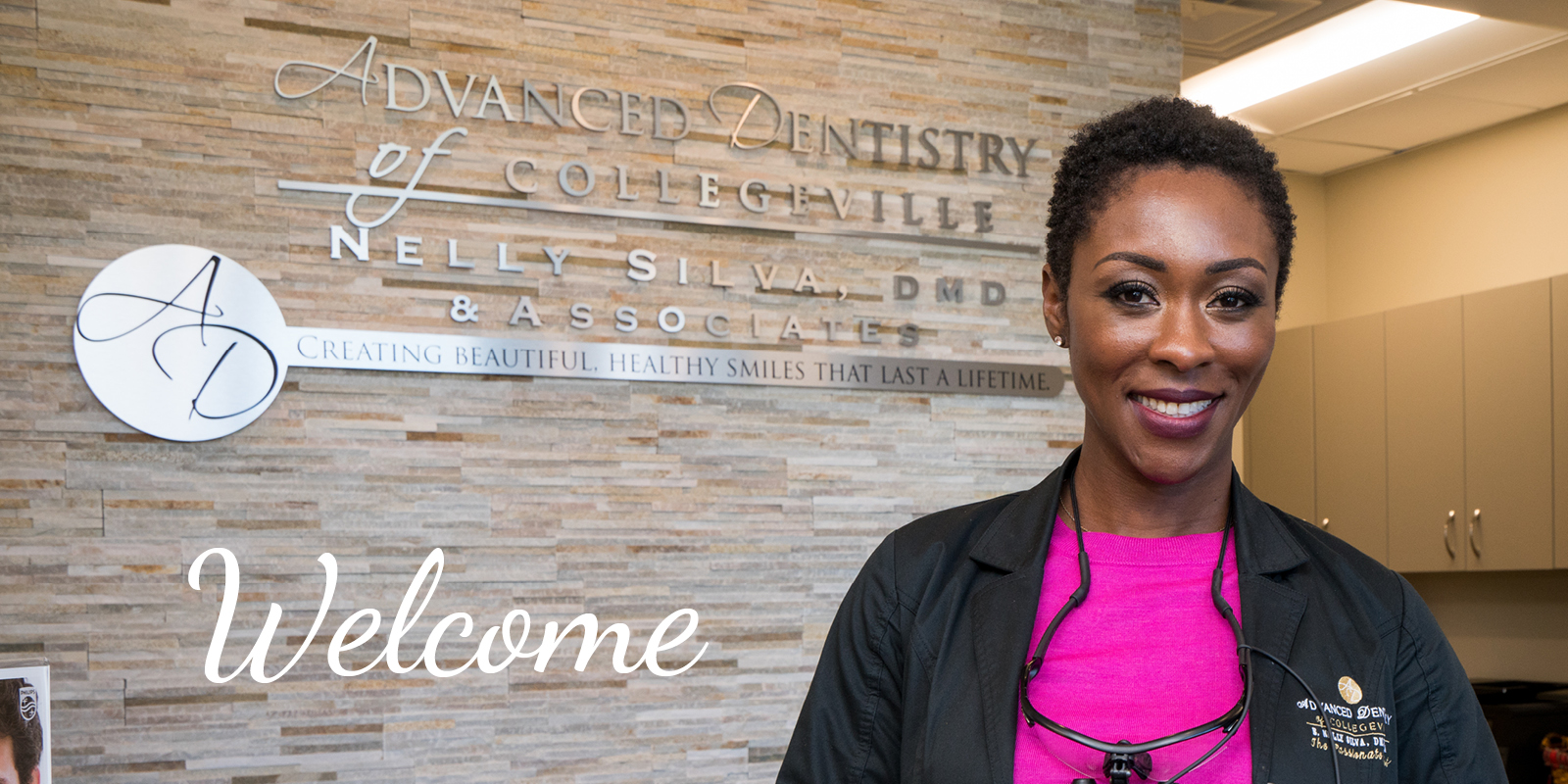
Dr. Nelly Silva, a Diplomate in Dental Sleep Medicine, treats obstructive sleep apnea with a custom oral appliance you wear like a mouthguard, with no mask, hose or machine.
 Dr. Nelly Silva, DMD
Who It Helps
Obstructive sleep apnea makes breathing stop and restart many times a night, often without you knowing. Most people learn about it from a bed partner or from tiredness that sleep never seems to fix.
Nodding off while driving, or several of these signs together with high blood pressure, is a reason to get evaluated soon rather than wait.
The Treatment
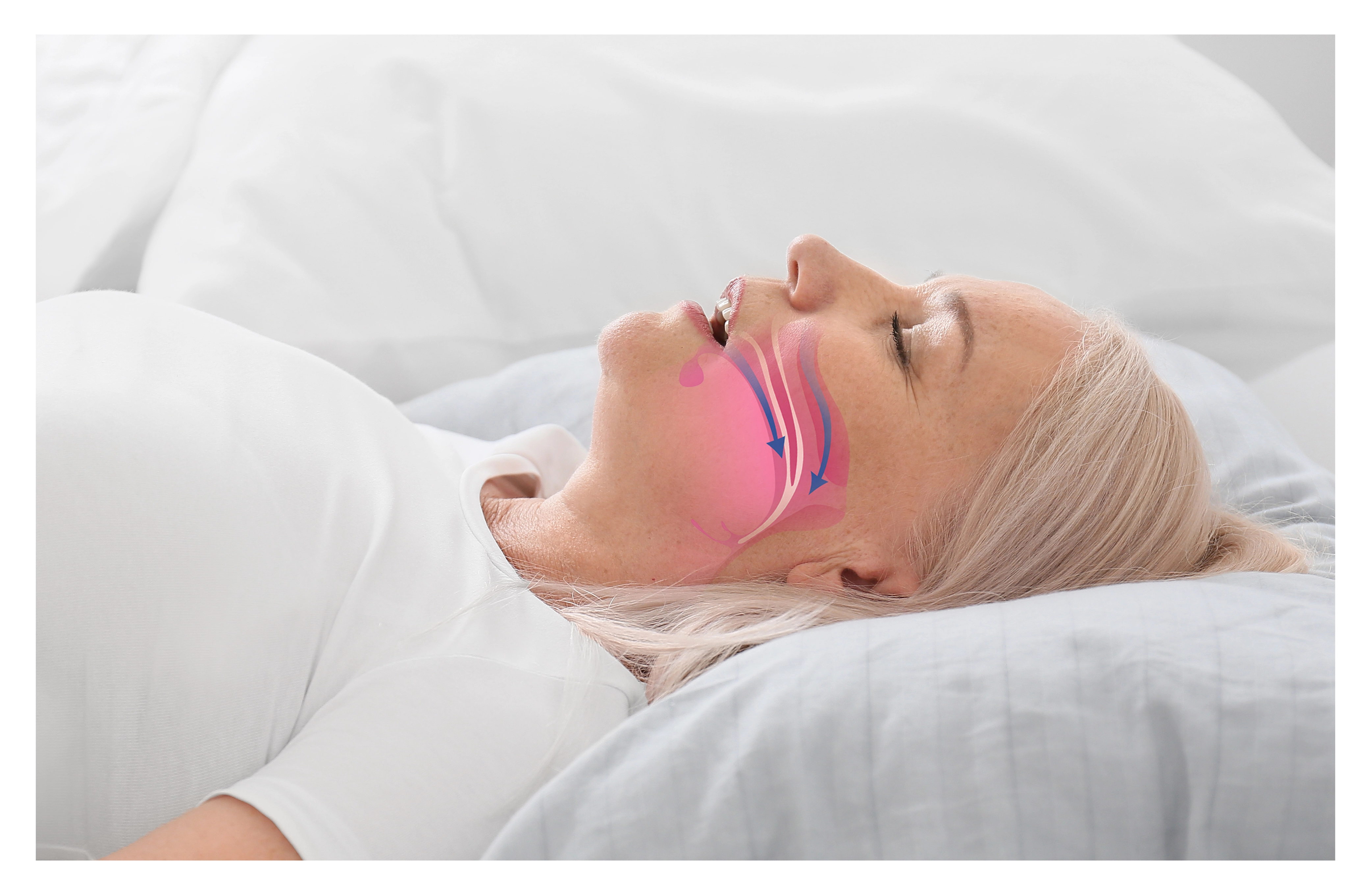
When you fall asleep, the muscles in your throat relax. In obstructive sleep apnea, the tongue and soft tissue fall back far enough to narrow or block the airway, so breathing stops until your brain jolts you awake.
An oral appliance is a custom device worn over your upper and lower teeth at night. It holds your lower jaw slightly forward, which keeps the tongue and soft tissue from collapsing into the airway.
We capture your teeth with our iTero Element scanner, so the appliance is built around your own bite.
The jaw position can be advanced gradually until your symptoms ease, while you stay comfortable.
There is no machine, no electricity and no hose, and the appliance travels in a small case.
Compare Your Options
CPAP is the most familiar treatment for sleep apnea, but it is not the only one. Here is how the two compare.
| Feature | CPAP Machine | Oral Appliance |
|---|---|---|
| How It Works | Pressurized air pushed through a hose holds the airway open. | The lower jaw is held slightly forward so the airway stays open. |
| What You Wear | A mask over the nose, or nose and mouth, attached to a bedside unit. | A custom device over your teeth, similar to a mouthguard. |
| Noise and Travel | The machine hums, and it needs tubing and a power source on trips. | Silent, and it fits in a pocket-sized case. |
| Often Suited To | Moderate to severe sleep apnea, and patients who use it comfortably. | Mild to moderate sleep apnea, and patients who cannot tolerate CPAP. |
| Who Provides It | Prescribed and managed by a sleep physician. | Made and adjusted by a dentist trained in dental sleep medicine, after a physician's diagnosis. |
The right choice depends on your sleep study results and your anatomy. Dr. Silva will tell you plainly if CPAP is the better fit.
What to Expect
Oral appliance therapy follows a clear sequence, and your sleep physician stays part of it from the first study to the last check.
A sleep physician confirms sleep apnea and measures how severe it is, with a home or in-lab study. If you already have a diagnosis, we start from there.
Before your visitDr. Silva reviews your study, health history and goals, then examines your teeth, jaw joints, bite and airway to confirm an appliance suits you.
First visitWe scan your teeth, and your appliance is custom made from those scans. At the fitting we check comfort and show you how to wear and clean it.
Typically a few weeks laterWe advance the jaw position in small steps until symptoms ease. A follow-up sleep test with your physician then confirms the appliance is working.
Over the following weeks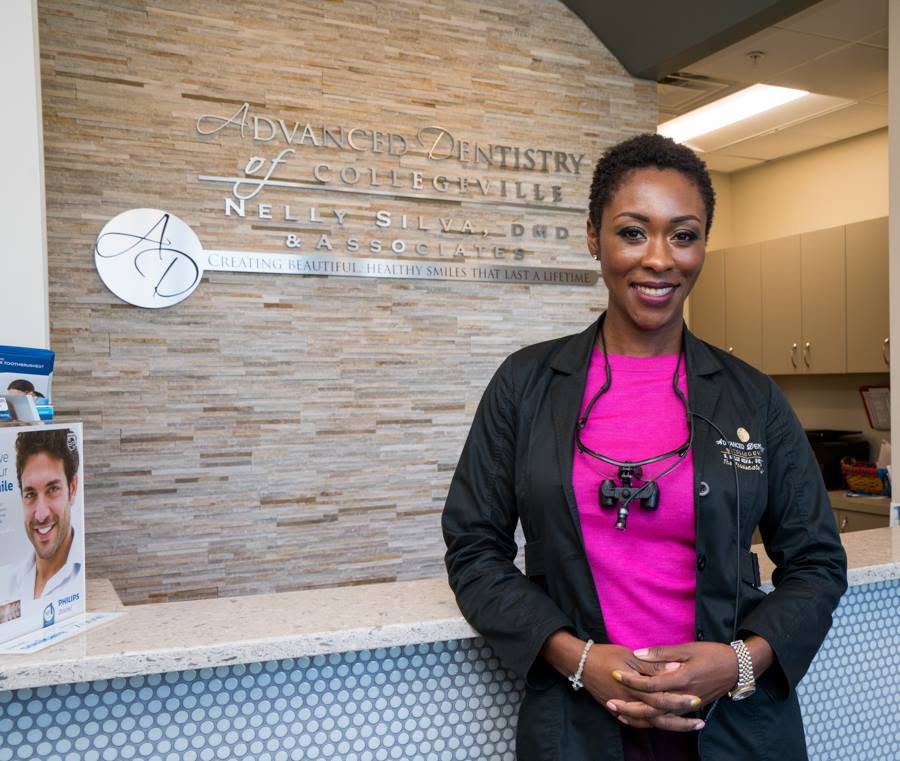
Your Sleep Dentist
Dr. Nelly Silva treats sleep apnea as part of a wider focus on how the airway, the jaw and nutrition shape overall health. She also teaches, as a Clinical Associate Professor at Temple University's Kornberg School of Dentistry, where she earned her DMD.
One patient calls her "an educator at heart," and she asks patients to call her Nelly.
"My sleep doctor referred me to Dr. Silva as a specialist for an oral appliance for my sleep apnea. My experience with the oral appliance has been fantastic. No more CPAP."
Meredith M., Google Review
"She treated my sleep apnea. We are so happy to find a treatment that is noninvasive and doesn't require a CPAP mask."
Layla M., Google Review
"Everyone is so nice and professional. They helped me with my sleep apnea."
Martin W., Google Review
Beyond the Appliance
Sleep apnea rarely sits on its own. Snoring, clenching, jaw pain and daily habits all play a part, so we look at the whole picture.
TMJ Care
Night-time clenching and jaw pain often show up alongside sleep problems. Dr. Silva completed a TMD Residency, so your appliance plan accounts for the health of your jaw joints.
Snoring
Not every snorer has sleep apnea. If your study rules it out but snoring still keeps you or your partner awake, ask about the laser snoring solutions we offer.
Education
Dr. Silva wrote Breathe Right to explain the link between nutrition, airway and a good night's sleep. Patients use it to understand the habits that support their treatment.
Cost and Coverage
The cost of oral appliance therapy depends on your diagnosis and your plan, so we go over coverage and costs with you before treatment begins.
FAQ
Answers to what patients ask most before their first sleep visit.
A sleep physician diagnoses sleep apnea with a sleep study, and a dentist trained in dental sleep medicine can treat it with a custom oral appliance. Dr. Silva is a Diplomate in Dental Sleep Medicine. Some of our patients come to us on their sleep doctor's referral after CPAP did not work out for them.
Habits such as weight management, avoiding alcohol close to bedtime and changing sleep position can lower symptoms for some people, but they rarely replace treatment on their own. An oral appliance treats the airway mechanically every night you wear it. Dr. Silva's book, Breathe Right, explains how nutrition, airway and jaw position affect sleep, and she brings that whole-person view to every treatment plan.
Yes. A sleep study can show that breathing stays normal through the night, and loud snoring does not always mean apnea. If your study rules out sleep apnea but snoring is still a problem, we can talk through our snoring solutions.
The pillow trick means raising your head or using a pillow that keeps you on your side, because airway collapse tends to be worse when you sleep flat on your back. It can make snoring and mild symptoms better for some people. It is not a substitute for diagnosed treatment, so we recommend an evaluation if symptoms continue.
Yes. Sleep apnea has to be diagnosed by a physician before treatment, and the study also shows how severe it is, which shapes the plan. If you have not had one yet, we will point you toward the testing you need.
Often, yes. Oral appliance therapy is a recognized option for people with mild to moderate obstructive sleep apnea and for people who cannot use CPAP. Dr. Silva reviews your sleep study and examines your bite and airway to confirm it suits you.
Most patients settle into wearing their appliance over the first few weeks. The device is made from scans of your own teeth, so it is built to fit your bite. We fine-tune the fit and jaw position at follow-up visits until it feels comfortable and does its job.
Whether you have a new diagnosis, a CPAP you cannot get along with or a partner tired of the snoring, Dr. Silva and our Collegeville team will help you find a treatment you can live with.
Advanced Dentistry of Collegeville, 399 Arcola Road, Collegeville, PA 19426