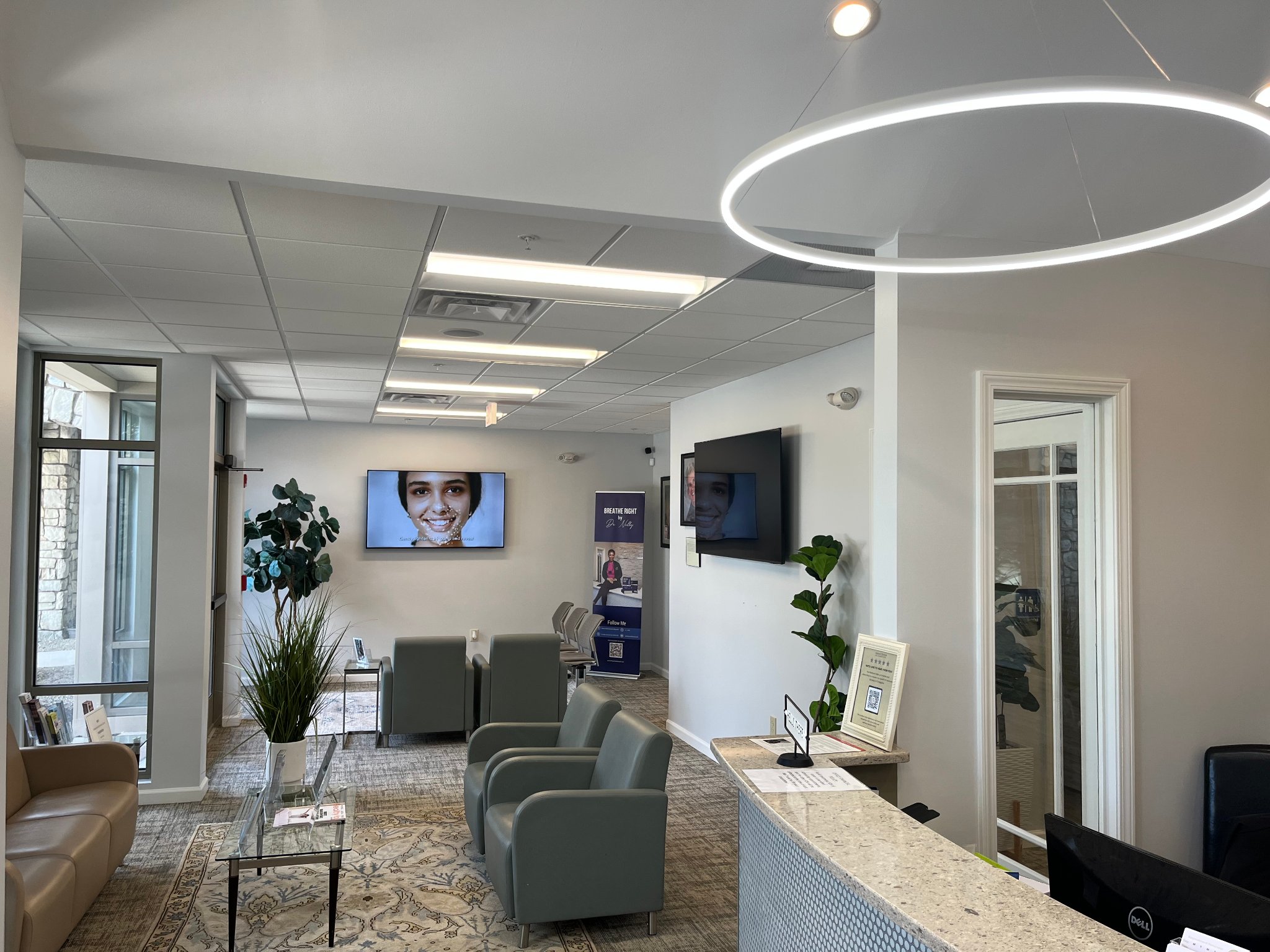
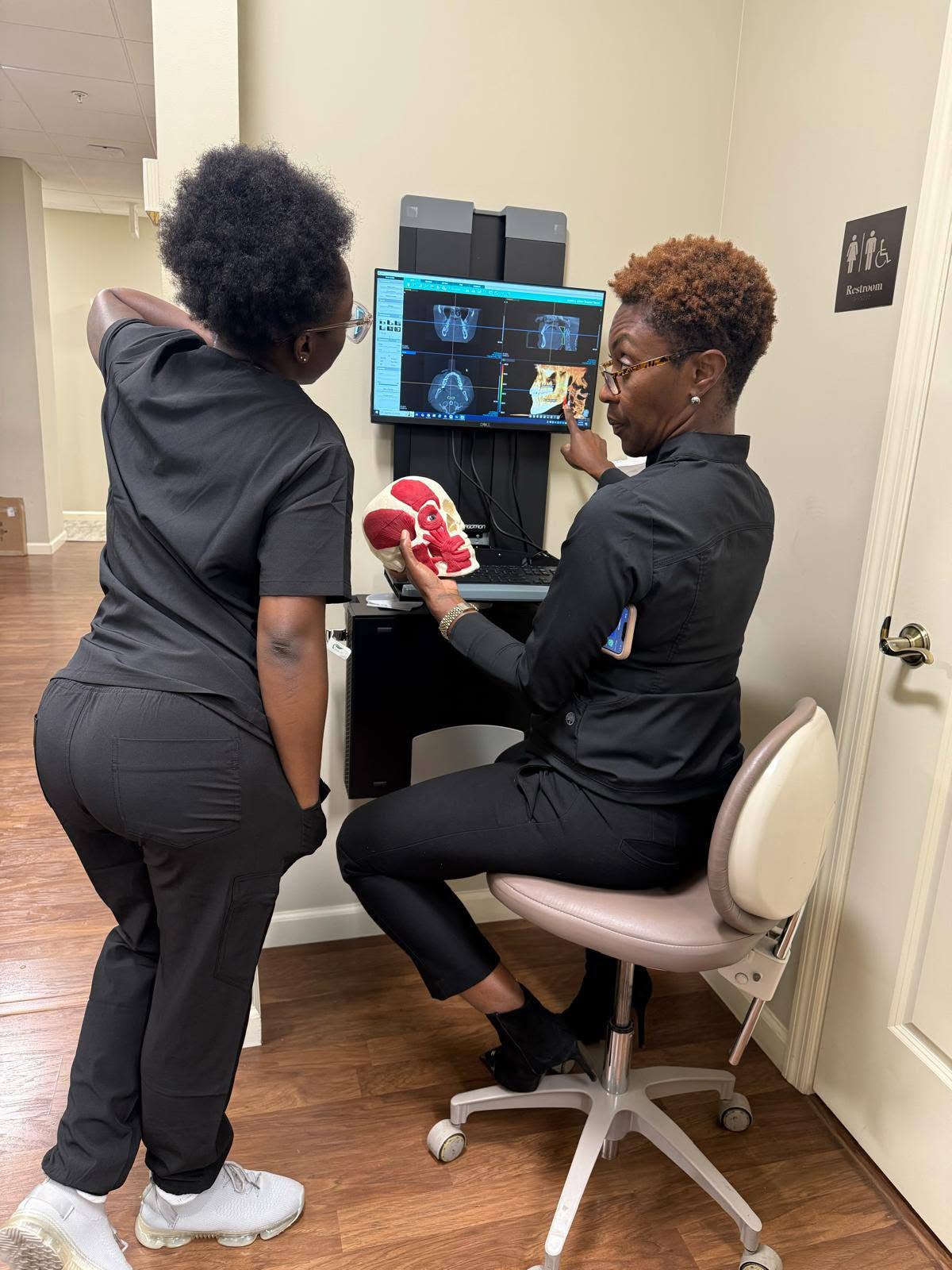
Dr. Nelly Silva, a Fellow of the American Dental Implant Association, plans every implant from a 3D CT scan taken in our own office.
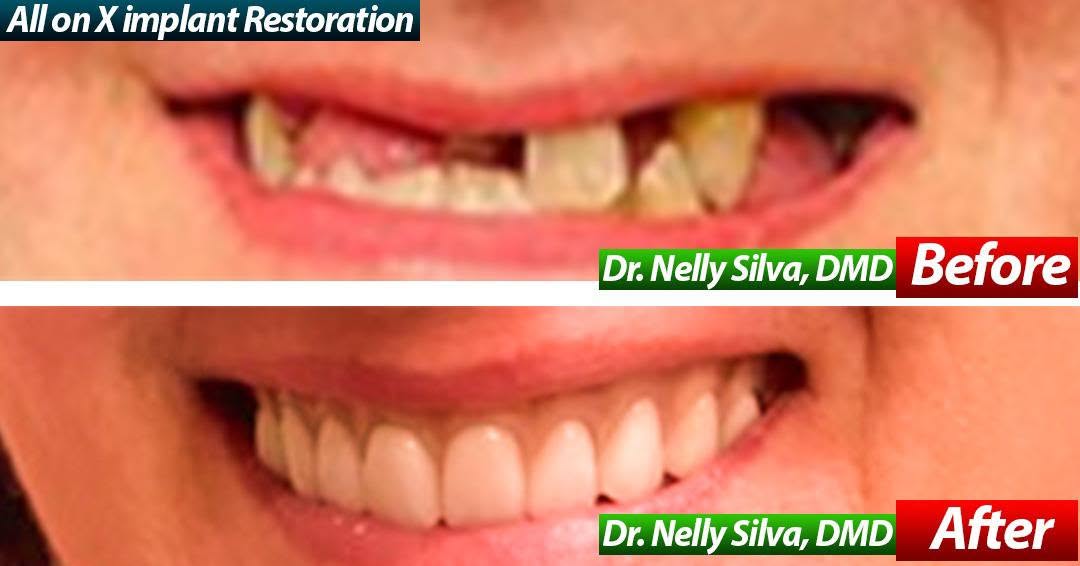
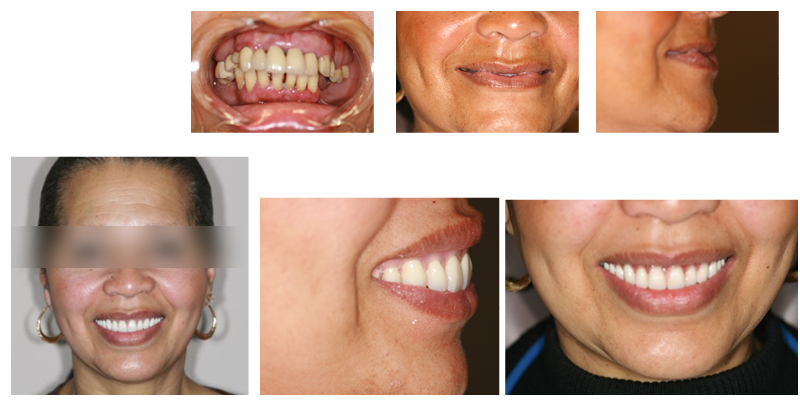
Both cases below were treated in our Collegeville office: a full arch rebuilt on implants, and a smile restored after years of wear and missing teeth.
A dental implant is a small titanium or zirconia post placed in the jawbone where a tooth root used to be. As the bone heals around it, the post becomes a stable base for a crown, a bridge or a full set of teeth.
Because the post sits in bone, it gives the jaw the pressure a natural root once did. That helps slow the bone shrinkage and tooth drifting that follow a lost tooth.
One post and one custom crown replace one missing tooth, and the healthy teeth on either side are left untouched.
When several teeth in a row are missing, two implants can anchor a bridge that spans the whole gap.
A denture that snaps onto implants stays put while you eat and speak, and still lifts out for cleaning.
Four to six implants hold a fixed arch of teeth that does not come out, the approach behind the All-on-X case above.
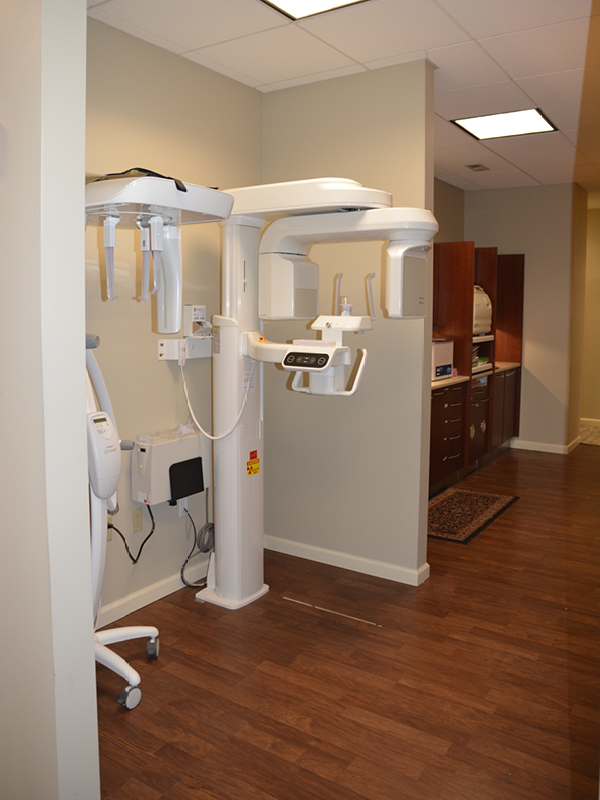
Our own Vatech CT scanner maps your bone height, bone width and nerve position in 3D, down the hall rather than at an outside imaging center. Dr. Silva uses that scan to choose the size, depth and angle of each implant before treatment begins.
Our iTero Element scanner records your bite digitally to guide the design of your final teeth. On treatment day we numb with The Wand, a computer-assisted system that delivers anesthetic slowly and steadily, and conscious sedation is available for anxious patients.
Most healthy adults who are missing teeth can have implants. Your exam and CT scan tell us whether your bone and gums are ready now or need care first.
Thin or soft bone is a common reason patients are told they cannot have implants. We place autogenous, allogenic and xenogenic bone grafts to rebuild the site.
Dr. Michael Strassberg practices periodontics with us, so gum treatment, grafting and implant placement all happen under one roof.
All three replace missing teeth. They differ in what holds them in place, what they ask of your other teeth and how they feel when you chew.
| Dental Implant | Bridge | Denture | |
|---|---|---|---|
| Held in place by | A post in the jawbone | Crowns on the teeth beside the gap | The gums, with suction or clasps |
| Neighboring teeth | Left untouched | Filed down to hold the crowns | Partials clip onto them |
| Jawbone | Stimulated by the post | Not stimulated under the gap | Not stimulated, so it keeps shrinking |
| Eating | Chews much like a natural tooth | Firm and fixed | Hard or sticky foods can be a challenge |
| Upfront cost | Highest | Moderate | Lowest |
A bridge or denture can still be the right call when health or budget points that way. We place implants and also make full and partial dentures, so the recommendation follows your mouth.
Most cases take several months from first scan to final tooth, and most of that time is quiet healing.
An exam, a CT scan and a plain talk about your options, timeline and cost.
An extraction, bone graft or gum treatment. Some grafts go in the same day as the implant.
Dr. Silva places the post in one visit under local anesthetic. You go home with written aftercare instructions.
Over roughly three to six months the bone bonds to the post. A temporary tooth can often fill the space.
The crown, bridge or arch is made from a digital scan and attached. Regular cleanings keep it healthy.
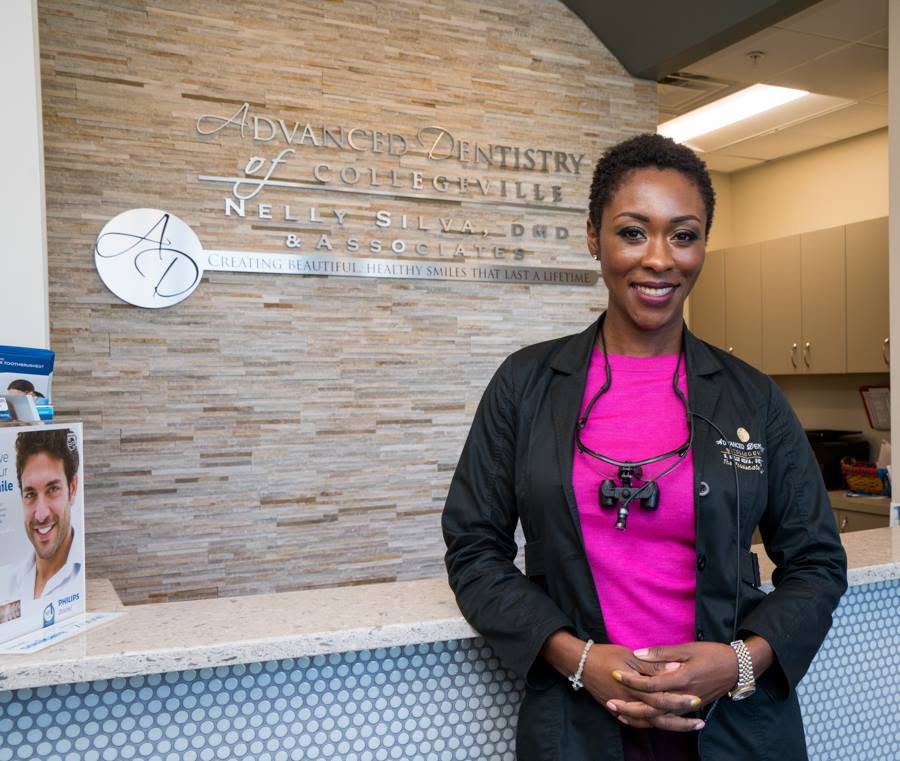
Dr. Nelly Silva plans and places implants herself, from single teeth to full-arch implant reconstruction. She earned her DMD at Temple University's Kornberg School of Dentistry, where she now teaches as a Clinical Associate Professor in the Department of Oral and Maxillofacial Pathology, Medicine and Surgery. She asks patients to call her Nelly.
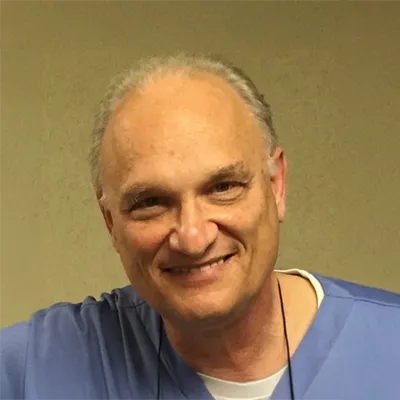
Dr. Michael Strassberg is skilled in all aspects of periodontics. When gums need treatment before an implant, he cares for them in the same office.
Dr. Silva is very knowledgeable and easy to speak with. I went for a second opinion on implants, she studied the X-rays and was able to give me her opinion at that appt.
Cindy D., Google Review
After not having a dental appointment for a few years because of life circumstances, my anxiety was at a high going into my appointment. Dr. Silva and her team were so helpful and welcoming and made the experience so easy.
Kyla K., Google Review
Implant cost depends on how many teeth are replaced, where they sit in the mouth, the crown, bridge or denture on top, and whether an extraction or bone graft comes first. We review the cost of your plan with you before any treatment begins.
We accept all PPO dental insurance plans and help you see what your plan covers. We do not accept Medicaid.
Our payment plans let you spread the cost of treatment over time rather than paying it all at once.
No dental insurance? Our dental savings plan is an option for patients paying on their own.
What patients ask us most before choosing implants.
Age alone rarely rules out implants. Your overall health and the bone in your jaw matter more than your birthday. Many older patients choose a few implants to anchor a denture so it stops slipping, while a traditional denture remains the lower-cost option. We offer both and will show you how each would work for your mouth.
Most implants today sit directly in the jawbone. What changes is the restoration on top: a single crown, an implant-supported bridge, a denture that snaps onto implants, or a fixed full arch held by four to six implants. Your CT scan and goals decide which one fits.
A bridge usually costs less on day one. An implant does not need the neighboring teeth to be filed down and tends to need fewer replacements, so the difference often narrows over the years. We price both options for your case so you can compare them side by side.
Implants are placed under local anesthetic, and the goal is that you feel pressure rather than pain. Numbing with The Wand and the option of conscious sedation help patients who dread dental work stay calm through the visit.
With good home care and regular checkups, the implant post can last for many years. It cannot decay the way a natural tooth can. The crown on top wears with chewing and may need replacing after 15 to 20 years.
Dr. Silva will examine your mouth, review your scan with you and explain every option that fits your health, goals and budget.
Visit Us399 Arcola Road, Collegeville, PA 19426