Dr. Nelly Silva brings TMD residency training and dental sleep medicine to every grinding case, so we find out why you grind before we protect your teeth.

Most grinding happens during sleep, so many people learn about it from a partner or at a dental exam. Daytime clenching is just as common and easier to miss.
Book a visit if you wake with jaw pain or headaches more than once a week, if a tooth has chipped or cracked, or if someone has told you that you snore and grind.
Book NowGrinding is usually a sign of something else. Each cause below points to a different treatment, which is why a guard alone is not always the whole answer.
Tension, long workdays and deep concentration bring on daytime clenching that many people never notice.
Habit awareness and a guardGrinding often occurs with snoring and obstructive sleep apnea, as the body works to keep the airway open.
Dental sleep medicineA strained jaw joint and overworked chewing muscles feed a cycle of clenching, soreness and more clenching.
TMJ treatmentTeeth that meet unevenly, or a high filling or crown, can keep the jaw searching for a comfortable position.
Bite evaluationCaffeine, alcohol, tobacco and some medications, including certain antidepressants, are linked to more grinding.
Review at your visitMany young children grind as baby teeth come and go. Most outgrow it, but snoring or mouth breathing deserves a closer look.
Pediatric dentistryMost offices fit a night guard and stop there. Dr. Silva trained in craniofacial pain and neuromuscular dentistry, so we also measure what your jaw muscles and joints are doing.
The K7 system records how your jaw opens, closes and rests, and how hard the chewing muscles work. TENS sends a gentle pulse that relaxes those muscles, so your bite can be measured in a rested position rather than a clenched one.
When the jaw joint itself is in question, our Vatech CT scanner takes a 3D view in the office. A digital scan with the iTero Element scanner gives a detailed model of your teeth and bite. Because grinding and sleep apnea often travel together, we also ask about snoring, daytime fatigue and how you sleep.
Your plan depends on what the exam shows. Many patients need protection for the teeth now and treatment of the cause over time.
A thin, hard guard made from a model of your teeth takes the force of grinding so your enamel does not. We adjust it in the chair until your bite meets evenly.
When sore muscles or a strained joint drive the clenching, treatment relaxes the muscles and supports the joint, guided by the K7 readings.
If grinding comes with sleep apnea diagnosed by a sleep physician, an oral appliance that holds the jaw forward may help keep the airway open at night.
For children whose grinding or oral habits affect their teeth, we offer habit appliances alongside our pediatric dentistry.
Athletes who clench during training or games can protect their teeth with a guard made for contact sports.
Chipped, flattened or cracked teeth can be rebuilt with bonding, crowns or a full mouth reconstruction once the grinding is under control.
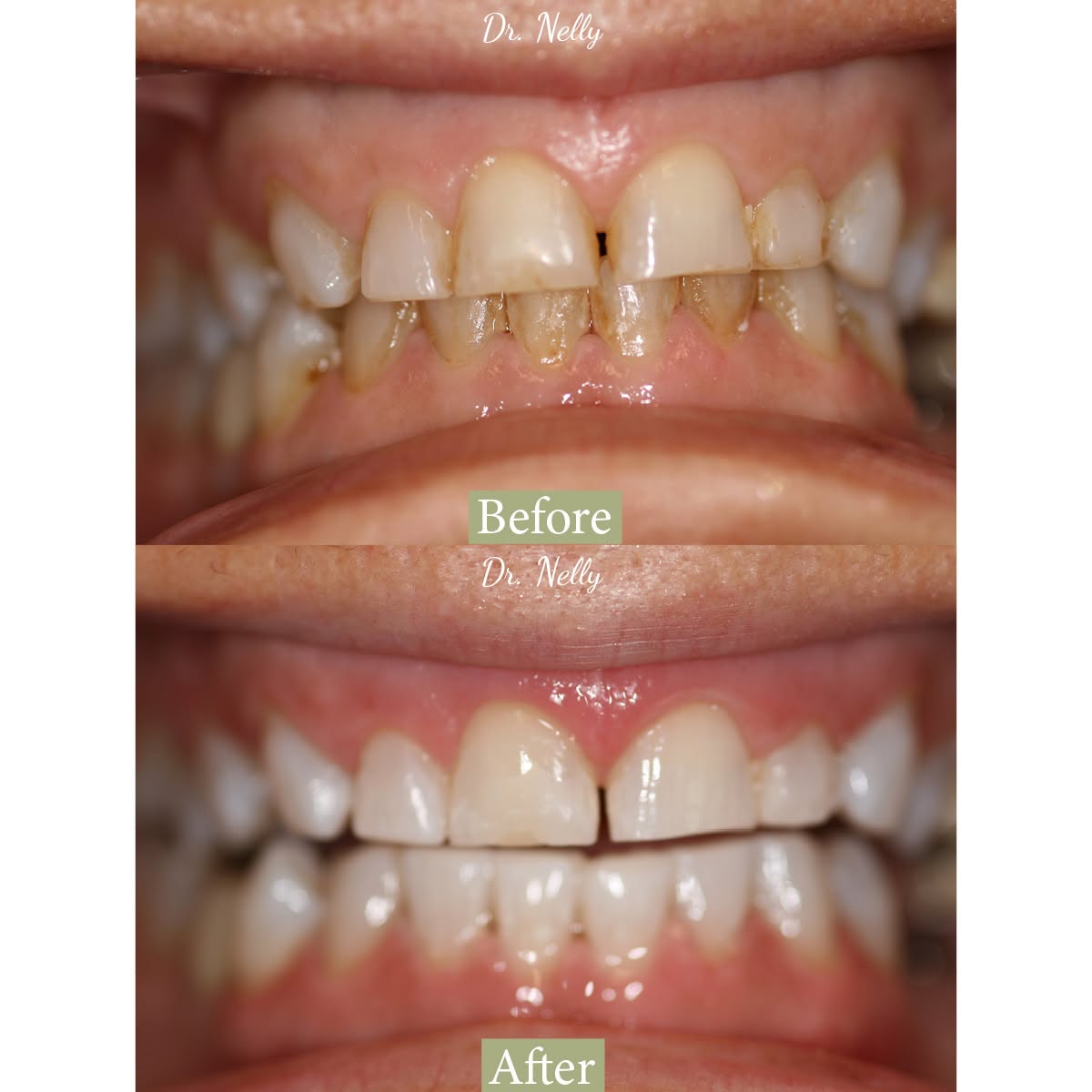
Restoring worn teeth lasts longer when the grinding behind the wear is treated first.
A drugstore guard is a reasonable stopgap. Here is how it differs from a guard made for your bite.
| Feature | Custom night guard | Store-bought guard |
|---|---|---|
| How it is made | From a model of your own teeth | Softened in hot water and bitten into at home |
| Fit and comfort | Thin and snug, so it stays in through the night | Bulkier and more likely to loosen or be pushed out |
| Effect on your bite | Checked and adjusted so the teeth meet evenly | Not adjusted, and an uneven guard can leave the jaw sore |
| Who checks it | Your dentist, at fitting and at checkups | No one, unless you bring it to a visit |
| Looks for the cause | Comes with an exam of the jaw, bite and sleep | Protects the teeth only |
Soft guards suit some patients and not others. We recommend the material after the exam.
 Dr. Nelly Silva, DMD
Dr. Silva treats grinding where dentistry, the jaw joint and sleep meet. She is a Fellow of the American Academy of Craniofacial Pain and a Diplomate in Dental Sleep Medicine, and she wrote Breathe Right: The Link Between Nutrition, Airway and Getting a Good Night's Sleep.
She earned her DMD at Temple University's Kornberg School of Dentistry, where she is now a Clinical Associate Professor. She invites patients to call her Nelly.
"I've been so scared but her team made me feel so welcome."
Gladys T., Google ReviewGrinding care is a short series of visits, then simple checks at your regular cleanings.
We ask about headaches, jaw pain and sleep, then check your teeth, muscles and jaw joints for signs of wear and strain.
When the jaw is involved, K7 readings, TENS and 3D imaging show how your muscles and joints are working.
Your custom guard is made from a model of your teeth. At the fitting visit we adjust it until your bite feels even.
We check the guard and your teeth at regular visits and adjust the plan if symptoms change.
Cost depends on what you need, since a night guard and a TMJ treatment plan are very different. We go over the cost of each option with you before treatment begins. We do not accept Medicaid.
There is rarely a single cause. Stress, sleep breathing problems, a bite that does not meet evenly, strain in the jaw joint, caffeine, alcohol and some medications can all play a part. That is why we look at your sleep, jaw and bite before choosing a treatment.
A night guard protects your teeth and spreads the force of clenching, but it does not always stop the habit itself. When grinding is tied to jaw muscle strain or a sleep breathing problem, treating that cause is what reduces it. Many patients need both protection and treatment of the cause.
Grinding during sleep can occur alongside obstructive sleep apnea and snoring, and some people clench as the airway narrows. Dr. Silva is a Diplomate in Dental Sleep Medicine, so she screens grinders for signs of a sleep breathing problem. If sleep apnea is diagnosed, an oral appliance from our office may be one treatment option.
A boil-and-bite guard can offer short-term protection, but it is thicker, can loosen during the night and is not adjusted to your bite. A poorly fitting guard can leave the jaw sore. A custom guard is made from a model of your teeth and checked in the chair so your bite meets evenly on it.
Grinding is common in young children and often fades as the baby teeth are replaced. It is still worth mentioning at your child's checkup, especially if they snore, breathe through the mouth or complain of jaw or ear pain. We offer pediatric dentistry and habit appliances when a child needs more than monitoring.
Yes. Clenching works the chewing muscles for hours at a time, which can cause morning headaches around the temples, a tired or sore jaw and pain near the ear. Over time it can strain the jaw joint and contribute to TMJ disorders, which Dr. Silva treats in our office.
Coverage for night guards varies from one dental plan to another. We are in-network with all PPO dental insurance plans and go over your costs before treatment. Patients without insurance can use our dental savings plan or payment plans.
One visit shows how much wear has started and what is causing it. Our office is at 399 Arcola Road, Collegeville, PA 19426.