Your screening is done by Dr. Nelly Silva, who teaches oral pathology at Temple, with Identafi® multi-spectral light to show tissue changes the eye alone can miss.
 Part of every checkup
Checking the neck for lumps is part of every screening.
An oral cancer screening is a structured exam of the soft tissues of your mouth, throat and neck, done when you have no symptoms. Its goal is to find precancerous changes and early cancers while they are small. We look, we feel, and then we use light to see beneath the surface.
Identafi is a compact handheld light, about the size of a dental instrument. It shines three distinct wavelengths on the tissues of your mouth, and each one shows something the others cannot.
Lights the tissue for a conventional visual exam, so we start from a clear look at color and texture.
Healthy tissue glows with natural fluorescence under violet light. Tissue that has lost that glow looks dark, which flags it for a closer look.
A narrow band of reflected light that shows the small blood vessels, helping tell normal vessel patterns from abnormal ones.
You wear filtered glasses during the violet light exam. The filter blocks the violet light so the tissue's own fluorescence is easier to see.
The screening takes a few minutes and fits into your regular dental exam. Nothing is cut or injected.
Tobacco and alcohol use, past sores and anything you have noticed in your mouth or neck.
Dr. Silva checks the lips, tongue, cheeks, palate and throat under white light.
She feels the floor of the mouth, the neck and the jaw line for lumps.
Violet and green-amber light are used to look more closely at the tissue.
We explain what we saw. A spot of concern is usually rechecked in about two weeks.
Every adult benefits from a screening at routine exams. Some patients need closer attention because their risk is higher.
Dr. Nelly Silva earned her DMD at Temple University's Kornberg School of Dentistry. She now teaches there as a Clinical Associate Professor in the Department of Oral and Maxillofacial Pathology, Medicine and Surgery, the field that studies diseases of the mouth and jaw, oral cancer included.
That teaching work shapes how she reads what a screening shows: what can be watched, what should be rechecked, and what needs a biopsy. She invites patients to call her Nelly.
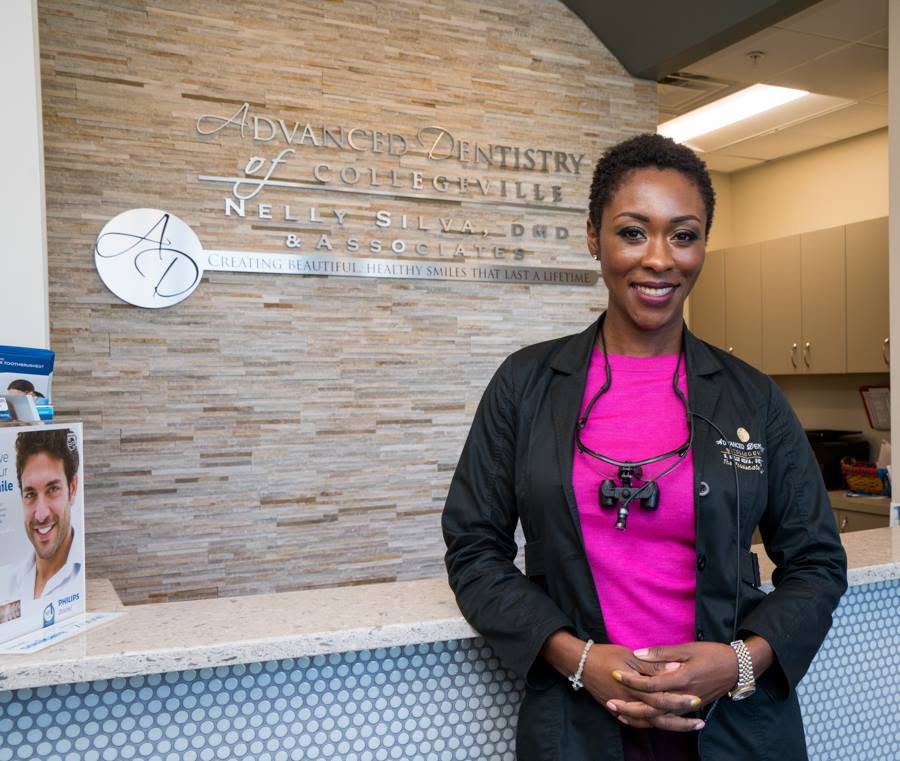
"Dr. Silva and her staff look beyond just teeth and are concerned with overall patient health and wellness."
Lucy T., Google Review
"Takes time for questions and gives detailed explanations. I felt very comfortable and relaxed."
Lynn M., Google Review
A monthly self-check takes two minutes in front of a well-lit mirror. It does not replace a professional screening, but it helps you notice a change early and tell us about it.
Pull your lips out and look at the inside and at your gums for sores, patches or color changes.
Pull each cheek out and look at the lining. Squeeze it gently between finger and thumb to feel for lumps.
Stick out your tongue, look at the top, then hold the tip with gauze to see both sides.
Lift your tongue to check underneath, then tilt your head back to see the roof of your mouth.
Run your fingertips along both sides of your neck and under your jaw. Feel for a lump, swelling or tender spot that is new, and book a visit if anything lasts longer than two weeks.
What you pay for a screening depends on your dental benefits and on whether it is part of a routine exam.
We accept all PPO dental insurance plans. We do not accept Medicaid.
An option for patients without dental insurance.
Available for treatment that may follow from your exam.
Yes, for adults. Early changes in the mouth often cause no pain and are easy to overlook, and a screening is how they get noticed at a stage when they are simpler to treat. It adds only a few minutes to your dental exam.
Most adults are screened at each routine dental exam. Patients who use tobacco, drink alcohol regularly or have had oral cancer before may need closer follow-up. Dr. Silva will recommend a schedule based on your history and findings.
Dentists and dental hygienists check the soft tissues of the mouth during routine visits. At our office, Dr. Nelly Silva performs the exam and uses the Identafi light to look more closely at any area of concern.
It is a quick check of how wide you can open your mouth: three of your fingers, stacked, should fit between your front teeth. Trouble opening can come from jaw joint problems, muscle tension or changes in the tissues of the mouth. It is not a cancer test on its own, but a new limit on opening is worth having examined.
It depends on your dental benefits and on whether the screening is part of a routine exam. We accept all PPO dental insurance plans and can review your coverage with you. Patients without insurance can ask about our dental savings plan, and payment plans are available.
The screening is non-invasive: no needles or drills are used. Dr. Silva looks at the tissues, feels the neck and jaw with her fingertips and shines the Identafi light in your mouth. You wear filtered glasses during the light exam, and most patients find the whole check comfortable.
Many spots turn out to be irritation, a small injury or another benign cause. Dr. Silva will often recheck the area in about two weeks to see whether it heals. If it does not, she explains the next step, which can include a biopsy, and refers you to a specialist when one is needed.
A few minutes at your next exam, with a clear answer before you leave.
399 Arcola Road, Collegeville, PA 19426