Dr. Nelly Silva, a Fellow of the American Academy of Craniofacial Pain, uses TENS to relax your jaw muscles and the K7 to measure where your jaw rests when they let go.
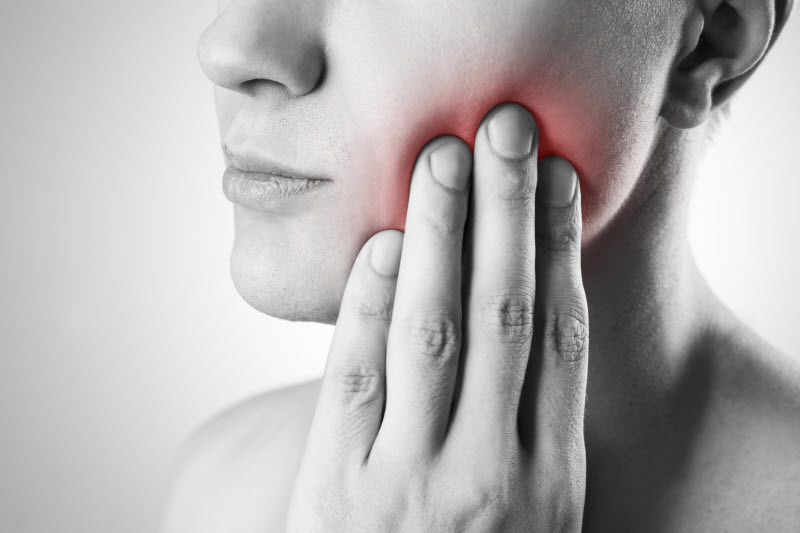
Traditional dentistry looks at teeth. Neuromuscular dentistry looks at the muscles and nerves that position the jaw, because a jaw that closes in a strained position can pull on the teeth, the joints and the muscles of the head and neck.
Many of these symptoms have other causes too. A TENS and K7 evaluation shows whether your bite is part of the picture.
TENS relaxes the jaw muscles. The K7 measures what your jaw does once they are relaxed. Together they show where your jaw rests comfortably and how far your current bite is from that position.
Transcutaneous electrical neural stimulation, or TENS, sends small, low-frequency electrical pulses through pads placed on the skin over the jaw and facial muscles.
The K7 is a computerized mandibular scanning system. It records how your jaw moves and rests, and gives Dr. Silva three kinds of data.
★★★★★The TENS procedure worked wonders for my jaw. Significant mobility and decreased pain.
Vickilynn Zazo, Google Review
Results differ from patient to patient. That is why every plan starts with measurements rather than guesses.
The evaluation moves from conversation to measurement to a conservative first treatment. Nothing about your teeth changes until the data supports it.
We review your symptoms and dental history, examine your teeth, bite and jaw joints, and decide together whether an evaluation makes sense.
The TENS unit relaxes your jaw muscles for just under an hour. You stay seated and can rest while it works.
With the muscles relaxed, the K7 records jaw position, muscle activity and joint sounds, then compares them with how you bite now.
If the data shows your jaw is out of alignment, we make a removable orthotic that holds it in the measured position.
You wear the orthotic for about three months. Then we reassess your symptoms and decide whether further care is needed.
Search for TENS and you will find drugstore units sold for back and knee pain. The TENS used in neuromuscular dentistry shares the name but has a different job.
| Factor | Dental TENS With K7 | Home TENS Unit |
|---|---|---|
| Purpose | Relaxes the jaw muscles so the jaw can find a relaxed position that is then measured | Eases how pain feels in sore muscles or joints |
| Placement | Pads over the jaw and facial muscles, placed by our team | Pads placed by the user on the back, knees or other body areas |
| Who Runs It | Dr. Silva and our team, as one part of a diagnostic workup | You, at home, following the package instructions |
| Data Recorded | Jaw position, muscle activity and joint sounds through the K7 | None |
| What Follows | A custom orthotic and a plan when the data supports one | Repeat sessions as symptoms return |
Ask us before placing any home TENS unit on your face or jaw.
Three months in an orthotic shows whether a changed jaw position relieves your symptoms. What comes next depends on that answer, and Dr. Silva walks you through every option before anything changes.
She also completed a 2-year post-training program with the International Association of Orthodontics, so tooth movement can be planned in the same office as your bite care.
Some patients need nothing more once the bite is stable and symptoms have eased.
Others keep wearing the orthotic to hold the jaw in its comfortable position over the long term.
Moving the teeth lets your natural bite meet in the new jaw position without an appliance.
Restorations rebuild worn or short teeth so the bite holds the measured position.
Small refinements to the biting surfaces even out how the upper and lower teeth meet.
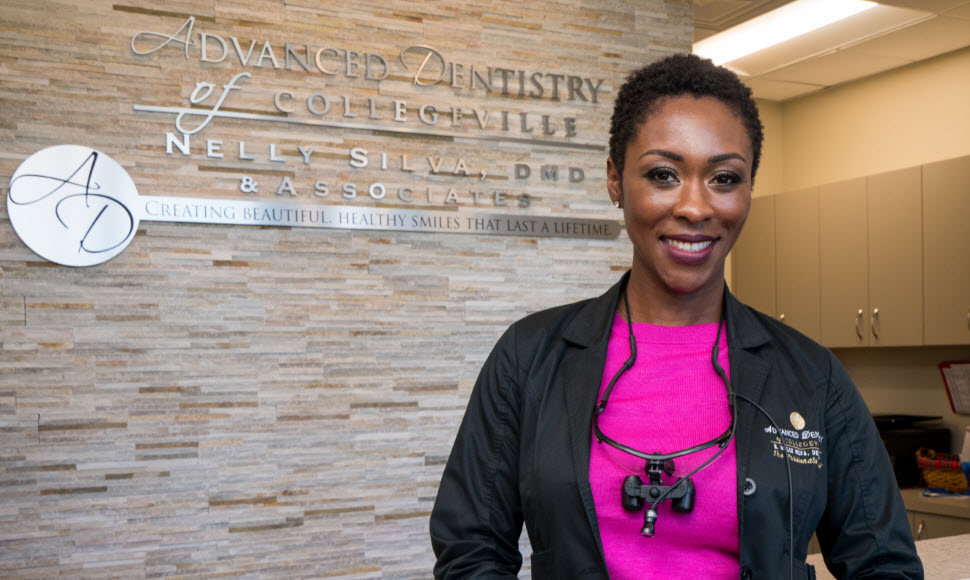
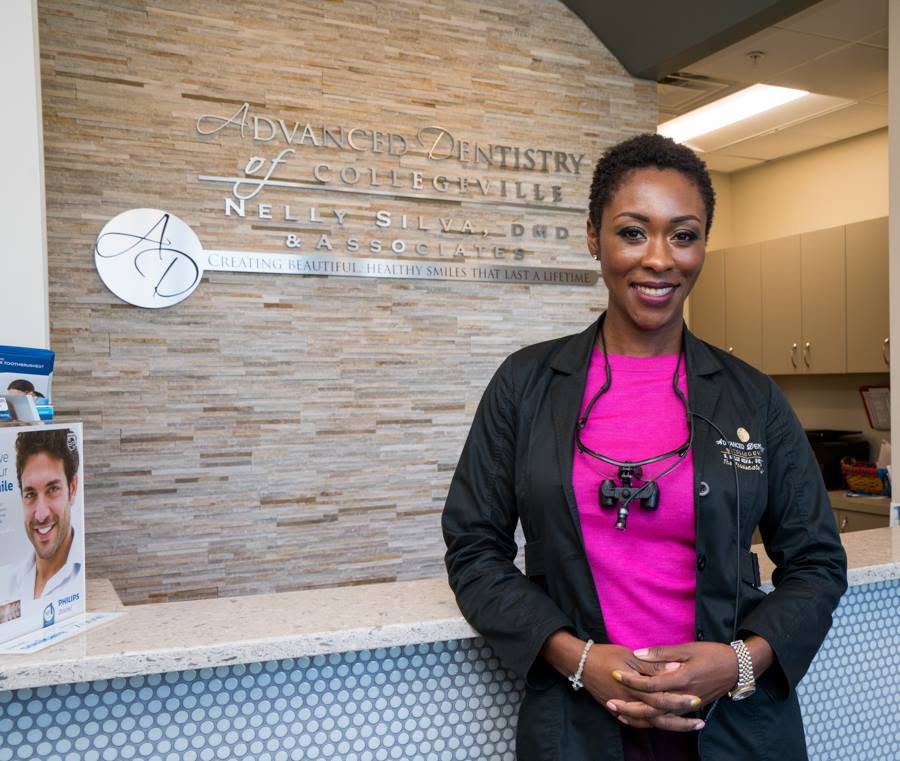
Neuromuscular dentistry is a postgraduate focus for Dr. Silva. She graduated from the Las Vegas Institute for Advanced Dental Studies, a postgraduate center for aesthetic and neuromuscular dentistry, and completed a TMD residency with the American Academy of Craniofacial Pain, where she is a Fellow. She has discussed TMD on CBS 3's American Health Front.
She earned her DMD at Temple University's Kornberg School of Dentistry and now teaches there as a Clinical Associate Professor. Patients are welcome to call her Nelly.
★★★★★Takes time for questions and gives detailed explanations. I felt very comfortable and relaxed.
Lynn Maison, Google Review
★★★★★I've been seeing Dr. Silva for over 10 years now.
Steven Meyers, Google Review
Your cost depends on what the evaluation finds and whether you need an orthotic or further care. We explain fees once your plan is clear, before treatment begins.
We accept all PPO dental insurance plans. Coverage for TMJ care varies, so we check your benefits with you. We do not accept Medicaid.
Payment plans let you spread the cost of your treatment over time.
Without dental insurance, our dental savings plan is another way to manage the cost of care.
Straight answers about the visit, the devices and what comes after. Ask us anything else at your consultation.
The TENS portion of your visit takes just under an hour. That is how long the jaw muscles usually need to fully relax before the K7 measures your jaw position. You stay seated in the chair the whole time.
You feel a light, rhythmic pulse in the muscles of your face and jaw, and your jaw may tap closed gently with each pulse. The stimulation is low frequency and the level is adjusted for you. Tell us at any point if it feels uncomfortable and we will turn it down.
No. The K7 tracks jaw movement with a small magnet and a sensor array, reads muscle activity through surface electrodes and listens to the jaw joints with sensors. When we need to see bone or joint structure, we use our Vatech CT scanner as a separate step.
Most patients wear the custom orthotic for about three months to stabilize the bite. At that point we reassess your symptoms together. Some patients need no further therapy, some keep the orthotic for maintenance and others move on to orthodontics or restorations.
We accept all PPO dental insurance plans, and coverage for TMJ care differs from plan to plan, so we check your benefits with you before treatment. We do not accept Medicaid. Payment plans and our dental savings plan are available if you need them.
A home TENS unit is built to ease how pain feels in the back, knees or other sore areas. It does not record jaw position, muscle activity or joint sounds, so it cannot show whether your bite is causing your symptoms. Ask us before placing any home unit on your face or jaw.
Clenching and grinding often show up alongside poor sleep and breathing problems at night. Dr. Silva is a Diplomate in Dental Sleep Medicine, so if you snore or wake up tired, tell us at your evaluation. We can look at your airway and your jaw together.
Tell us about your headaches, jaw pain or clenching. You leave your consultation knowing whether a TENS and K7 evaluation fits your symptoms and what would come next.
399 Arcola Road, Collegeville, PA 19426