We measure every gum pocket, rule out conditions that only look like gum disease, and treat the cause in our own office, from a careful cleaning to laser periodontal treatment with Dr. Michael Strassberg.

Bleeding is the first sign of inflamed gums, and the earlier it is treated, the simpler the fix.
| Stage | What you notice | What is happening | Outlook |
|---|---|---|---|
| Healthy gums | Firm, pink gums that do not bleed when you brush or floss | The gum fits snugly around each tooth with a shallow pocket | Keep it up |
| Gingivitis | Red, puffy gums that bleed when you brush or floss | Plaque at the gumline inflames the gum. The bone is not affected yet | Reversible |
| Early periodontitis | Bleeding, bad breath and gums that start to pull away | Tartar forms below the gumline, pockets deepen and bone loss begins | Treatable |
| Moderate periodontitis | Receding, tender gums and teeth that look longer | Infection reaches the bone that holds the roots | Treatable |
| Advanced, stage 4 | Pus, loose or drifting teeth and a bite that feels different | Severe bone loss puts the teeth themselves at risk | Treat promptly |
Smoking can hide bleeding, so gum disease in smokers is often further along than it looks.
Plaque is behind most cases, but finding the other factors is what keeps the bleeding from returning.
Bacteria along the gumline trigger the inflammation. Once plaque hardens into tartar, a toothbrush can no longer remove it.
A firm brush or heavy scrubbing scrapes the gum edge. Bleeding from new flossing fades as the gums heal.
Pregnancy, puberty, menstrual cycles and menopause make gums react more strongly to the same amount of plaque.
Blood thinners make gums bleed more easily, and some seizure, blood pressure and transplant medications can enlarge them. Keep taking them and tell us what you use.
Gums that dry out overnight from mouth breathing or snoring tend to stay red and puffy. Dr. Silva is a Diplomate in Dental Sleep Medicine and checks the airway when this pattern shows up.
Diabetes, low vitamin C, bleeding disorders, stress and tobacco all change how gums bleed and heal. Dr. Silva's book Breathe Right covers the nutrition side.
A canker sore, a gum growth during pregnancy, irritation from a denture or appliance that no longer fits, a reaction to a toothpaste or rinse, a vitamin deficiency or an immune condition such as lichen planus can all look like inflamed gums. Rarely, a patch that bleeds and does not heal is an oral lesion that needs a closer look.
Dr. Silva teaches oral pathology and medicine at Temple University's Kornberg School of Dentistry, so look-alikes are part of every gum exam here. Any spot that has not healed within two weeks deserves an exam.
"After receiving a deep cleaning and laser treatment, my gums don't bleed when I brush anymore."
K. C., Google Review
Most bleeding gums need a dental visit, not an emergency room. These signs sort out how soon.
Facial swelling with fever or trouble breathing or swallowing needs the emergency room first.
Most bleeding gums respond to a thorough cleaning. Treatment steps up only when the measurements show deeper pockets or bone loss.
We check each gum pocket with a gentle probe, note where it bleeds and look at the bone on x-rays or a 3D Vatech CT scan.
Gingivitis usually needs a careful professional cleaning. Deeper pockets need scaling and root planing below the gumline, numbed with The Wand.
When pockets stay deep, Dr. Strassberg offers laser periodontal treatment, pocket reduction, and gum or bone grafts to rebuild support.
Periodontal maintenance cleanings and a home routine your hygienist shows you keep the bleeding from returning.
"Inayah did an excellent job from beginning to end, made me comfortable, listened and accommodated my concerns and skillfully finished deep cleaning my gums and teeth."
Google Review
Diagnosis and gum treatment happen under one roof.

DMD, Temple University Kornberg School of Dentistry . Fellow, International College of Dentists . Diplomate in Dental Sleep Medicine
Dr. Silva leads your gum exam, rules out conditions that mimic gum disease and looks for sleep and airway links when they fit. She invites patients to call her Nelly.

Periodontics
Dr. Strassberg is skilled in all aspects of periodontics. When bleeding gums have moved past a cleaning, he provides the deeper gum treatment in our office.
Cost depends on the stage. After your exam, we go over the cost of each option before anything begins. We do not accept Medicaid.
A professional cleaning that removes tartar, followed by gentle brushing twice a day and daily flossing. With gingivitis, bleeding often eases within one to two weeks of steady care. Rinses and home remedies can soothe the gums, but they cannot remove tartar below the gumline.
Irritation from a scrape or trapped food usually settles within a few days. Inflammation caused by plaque and tartar keeps returning until the deposits are removed, and it can progress to periodontitis without much pain. Bleeding that lasts more than a week or two needs an exam.
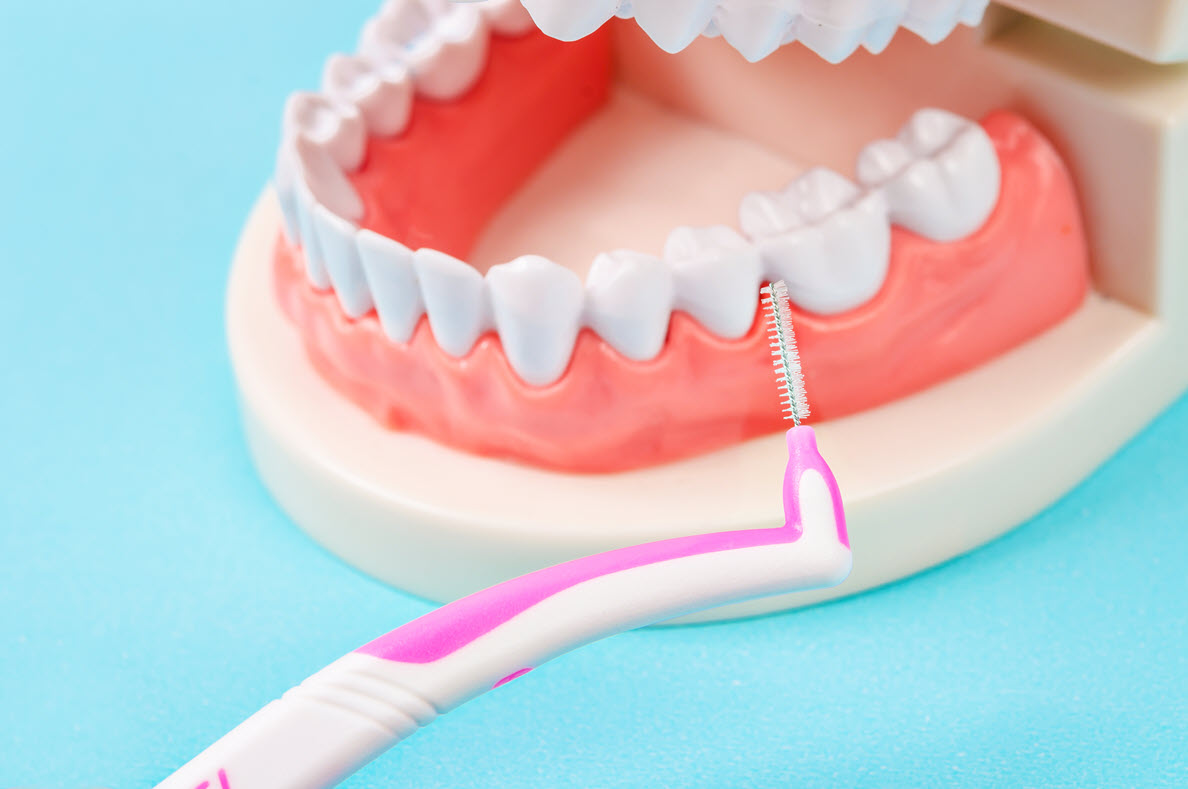
The spaces between teeth are where a toothbrush misses and plaque collects first, so gingivitis often starts there. Food packing into a gap, a rough filling edge or a crowded tooth can also irritate one spot. Floss or an interdental brush reaches the area, and an exam finds any spot that keeps trapping food.
Canker sores, irritation from a denture or appliance, a reaction to a toothpaste or rinse, vitamin deficiencies, hormonal gum changes and immune conditions such as lichen planus can all look similar. Rarely, a red or bleeding patch that does not heal is a lesion that needs a biopsy. We examine any unusual spot and screen it with Identafi.
A gum infection cannot be flushed out at home. Warm salt water rinses ease soreness and keep the area clean until your visit, but the bacteria live in tartar and pockets below the gumline. A deep cleaning removes them, and an abscess may also need drainage or medication.
Stage 4 periodontitis is the most advanced form of gum disease. Bone loss around the roots is severe, teeth may loosen or drift, and the bite can change. Treatment controls the infection and protects the teeth that can be kept, which may include laser periodontal treatment, pocket reduction and bone grafting.
No. When you floss gently, bleeding is a sign of inflammation rather than damage from the floss. Keep going and the bleeding usually lessens within a week or two. If it does not, the gums need a professional cleaning.
One exam shows whether it is gingivitis, gum disease or something else. Our office is at 399 Arcola Road, Collegeville, PA 19426.