Dr. Silva trained in aesthetic dentistry at the Las Vegas Institute, and we find what caused the color before we choose a cleaning, whitening, veneers or a crown.
Every case below is a patient of Dr. Silva. Some needed whitening alone, others veneers or crowns, depending on what was causing the color.
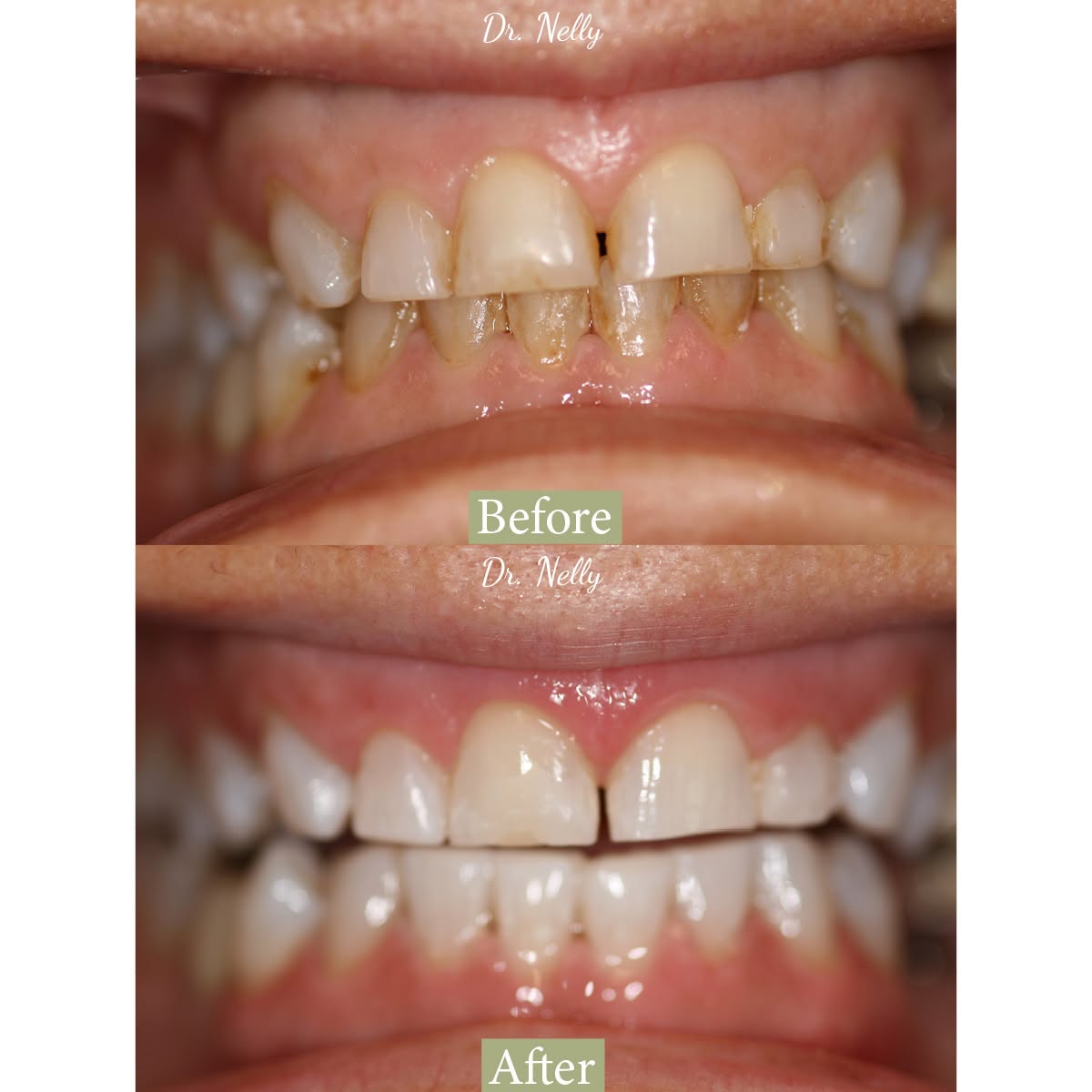
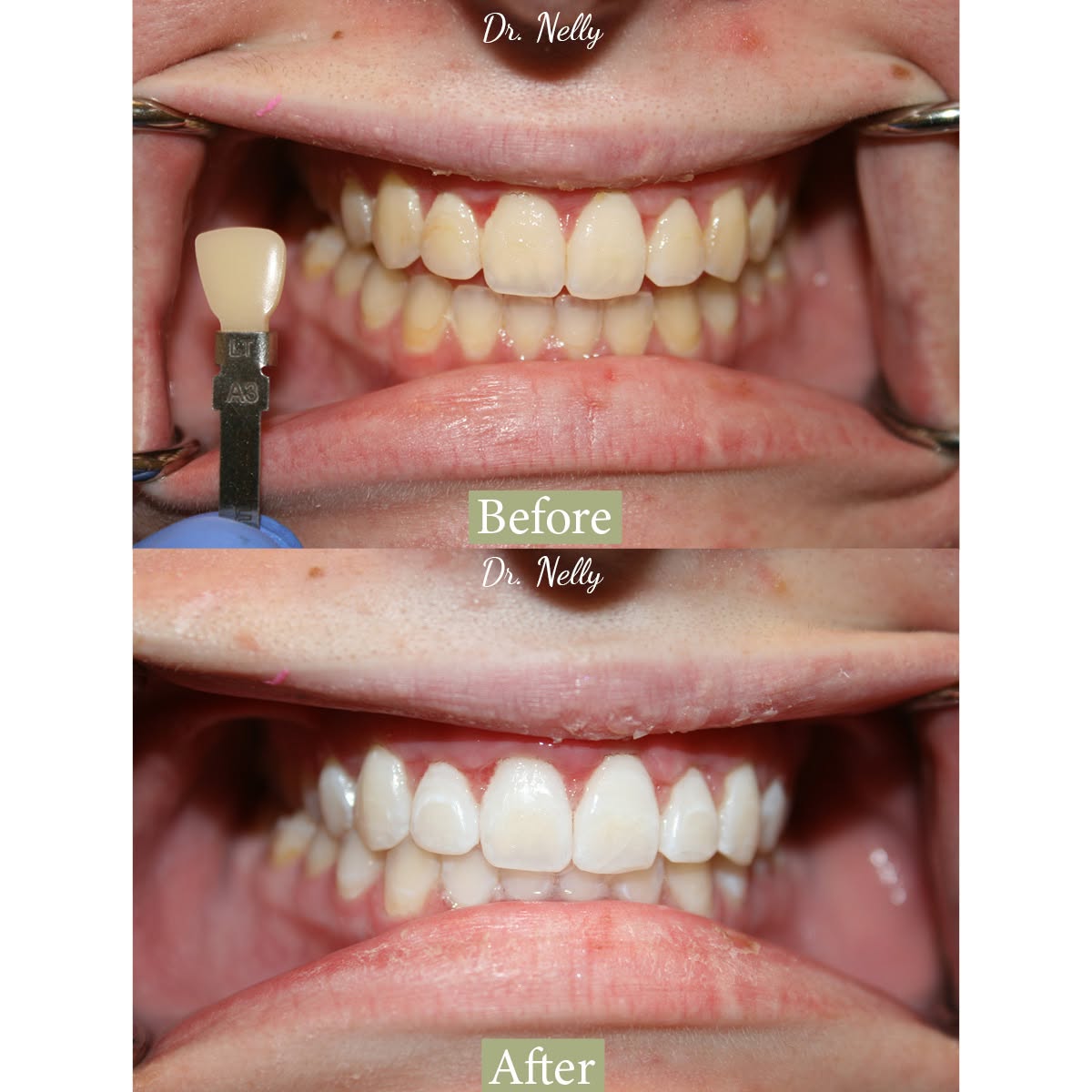

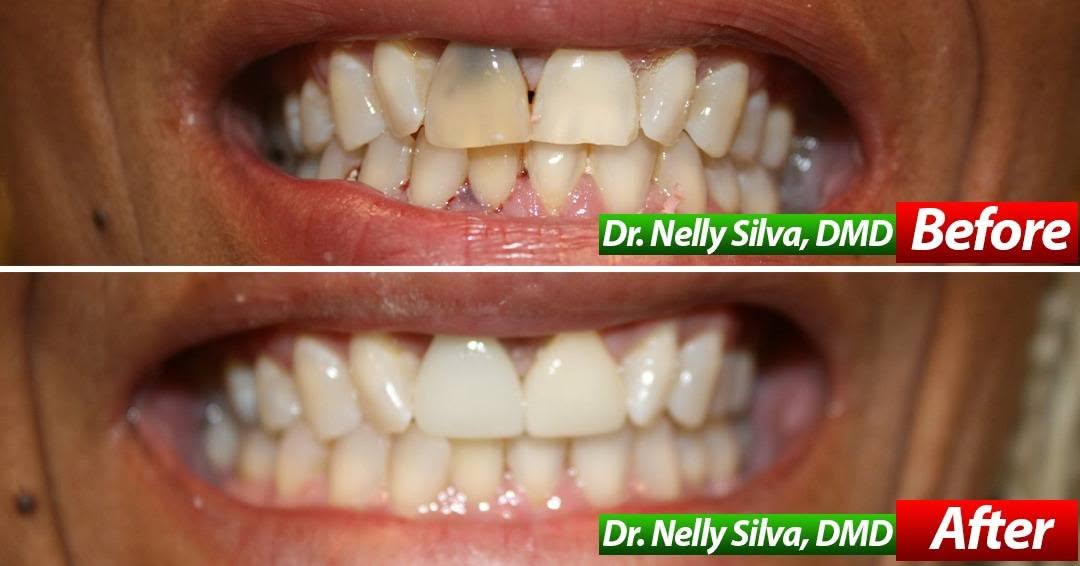
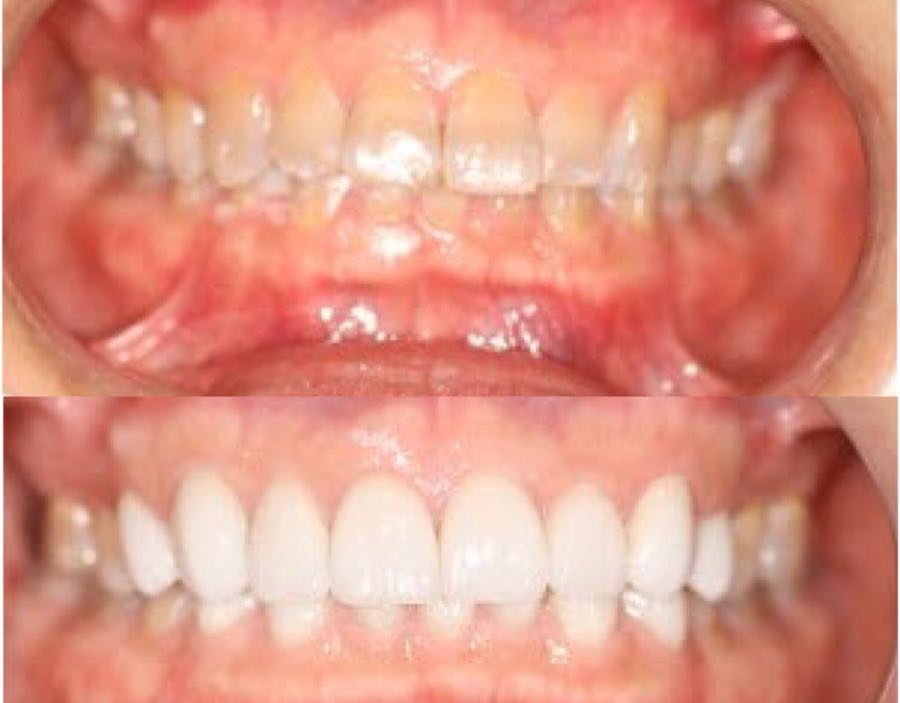
Where the color sits decides what will remove it. A stain on the surface and a color change inside the tooth need very different care.
| Type | What it looks like | Common causes | What usually works |
|---|---|---|---|
| Extrinsic Surface Stain | A yellow to brown film, darkest at the gumline and between teeth. | Coffee, tea, red wine, cola and tobacco, held in place by plaque and tartar. | A professional cleaning and polish, then whitening if needed. |
| Intrinsic Inside the Tooth | Gray, blue-gray or brown tones, or white spots that never brush off. | An injured nerve, tetracycline antibiotics or excess fluoride while teeth formed, decay and old silver fillings. | Veneers or a crown. A tooth with a damaged nerve needs root canal therapy first. |
| Age-Related Gradual Darkening | An overall yellow cast with thin, see-through biting edges. | Enamel wears thinner with age and lets the yellow dentin underneath show through. | Whitening, or veneers when enamel is worn thin. |
Many smiles have more than one type at once, which is why we start with a cleaning and an exam rather than a whitening tray.
The shade of a stain is often the first hint about its cause. These are the patterns we see most, and what each one usually points to.
Usually surface stain or thinning enamel that lets the dentin show. Of all the colors, yellow responds most reliably to whitening.
Coffee, tea, tobacco and tartar on the surface. A brown spot that feels soft or catches floss can be decay.
Often comes from inside the tooth: an injured nerve, old silver fillings or antibiotics taken in childhood. Whitening rarely lifts it.
Weak, demineralized enamel, too much fluoride while teeth formed, or marks left around old braces brackets.
Decay, hardened tartar near the gums, or the dark edge of an aging filling or crown. These need a check, not a whitening kit.
A single tooth changing color while its neighbors stay the same points to the nerve inside. Read what that means below.
When one front tooth turns pink, gray or brown while the rest stay white, the cause is almost always inside it. A fall, a sports hit or biting down hard can bruise the nerve, and the color can change weeks or even years later.
These teeth often do not hurt, so many patients assume the dark tooth is just a stain. Whitening the outside will not reach this color. We check the nerve and the root first, then restore the tooth so it matches the rest of your smile.
"Dr. Nelly was so kind, professional, explained everything and put in process a plan for my teeth."
Kristen K., Google ReviewThere is no single fix for discolored teeth. These are the four treatments we match to the cause, often starting with the simplest.
Our hygiene team removes surface stain from coffee, tea and tobacco along with the tartar that holds it. It also shows how much of the color was only on the surface.
Suited toSurface stain and tartar
Whitening lightens natural enamel. It does not change fillings, crowns or veneers, so we plan any restorations around your new shade.
Suited toYellowing and age-related darkening
Thin shells bonded to the front of the teeth, in a shade we choose with you using a shade guide. They cover color that whitening cannot reach.
Suited toGray, spotted or worn front teeth
A crown covers the whole tooth and is shaded to blend with its neighbors. It also protects a tooth weakened by large fillings or a root canal.
Suited toA dark tooth that is also damaged
We treat the color you see and the reason behind it, so the result looks natural and lasts.
We look at the color, where it sits and when it started, and take x-rays to rule out decay or a damaged nerve.
A professional cleaning and polish removes surface stain, so we can see the true shade of your teeth.
We show you what we found and lay out the options that fit the cause, including what whitening can and cannot change.
Whitening, veneers or crowns, with The Wand for gentle numbing when a tooth needs it. Conscious sedation is available for anxious patients.
"I'm glad I chose Advanced Dentistry of Collegeville to get my teeth looking and feeling fresh again."
Google ReviewYour cost depends on what is causing the color. Dental plans usually treat cleanings and the repair of an injured or decayed tooth differently from cosmetic whitening or veneers.
We do not accept Medicaid insurance.
Dr. Silva is our general dentist and treats discolored teeth in our Collegeville office, from the first exam to the final shade.
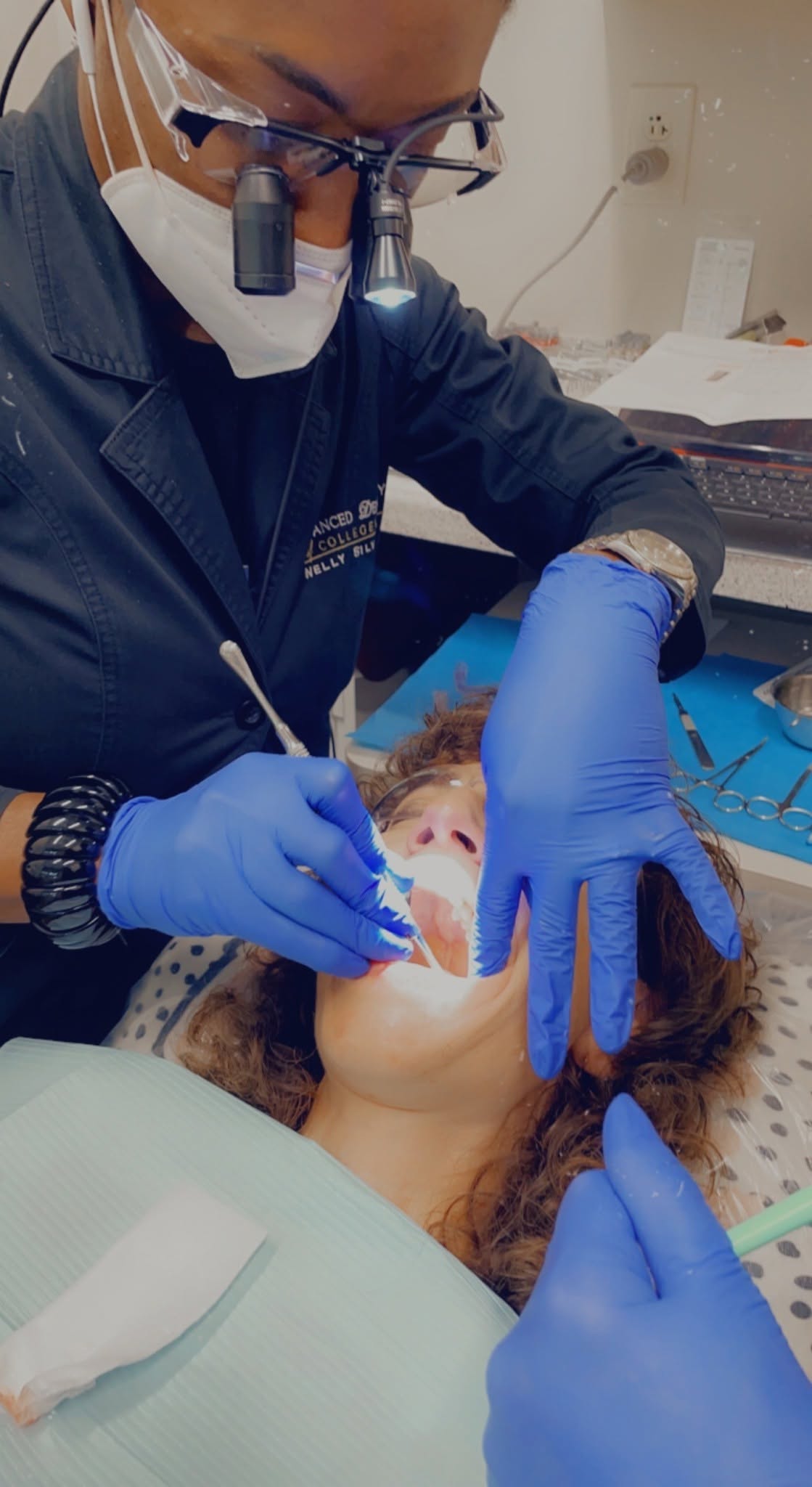
DMD, Temple University Kornberg School of Dentistry
Graduate, Las Vegas Institute for Advanced Dental Studies
Fellow, International College of Dentists
Dr. Silva completed postgraduate training in aesthetic dentistry at the Las Vegas Institute for Advanced Dental Studies, which shapes how she plans the shade, shape and proportion of veneers and crowns.
She is also a Clinical Associate Professor in the Department of Oral and Maxillofacial Pathology, Medicine and Surgery at Temple, so she knows when a color change is more than a stain. She invites patients to call her Nelly.
Straight answers to what patients ask us most about stained and darkened teeth.
Dentists sort discoloration into three groups. Extrinsic stains sit on the enamel surface and come from coffee, tea, red wine and tobacco. Intrinsic discoloration forms inside the tooth from injury, certain medicines or too much fluoride while teeth are developing, and age-related darkening comes from thinning enamel over yellower dentin.
Yes. A fall, a sports hit or biting down hard on something can injure the nerve inside a tooth, and the tooth may turn pink, gray or brown over the following weeks or months. A tooth that darkens after an injury should be examined, because the nerve may be dying even when it does not hurt.
Chemotherapy or radiation given in early childhood, while adult teeth are still forming, can leave enamel spots or color changes. In adults, cancer treatment more often causes dry mouth, which lets stain and decay build up faster. Tell us about any past or current cancer treatment so we can plan around it.
No. Whitening lightens natural enamel and works well on yellow and surface-level stain. It does not change the color of fillings, crowns or veneers, and gray intrinsic discoloration often responds poorly. In those cases veneers or a crown give a more even result.
A professional cleaning and polish removes much of the surface stain from coffee, tea and tobacco, along with the tartar that holds stain against teeth. Stain that sits inside the tooth will not polish away. Starting with a cleaning shows how much of the color was on the surface.
It depends on the cause. Cleanings and the repair of a damaged or infected tooth are treated differently by dental plans than purely cosmetic whitening. We are in-network with all PPO dental insurance plans, offer payment plans and a dental savings plan, and go over your own cost after the exam.
One exam shows whether your discoloration is surface stain, a change inside the tooth or both, and which treatment will fix it. Our office is at 399 Arcola Road, Collegeville, PA 19426.