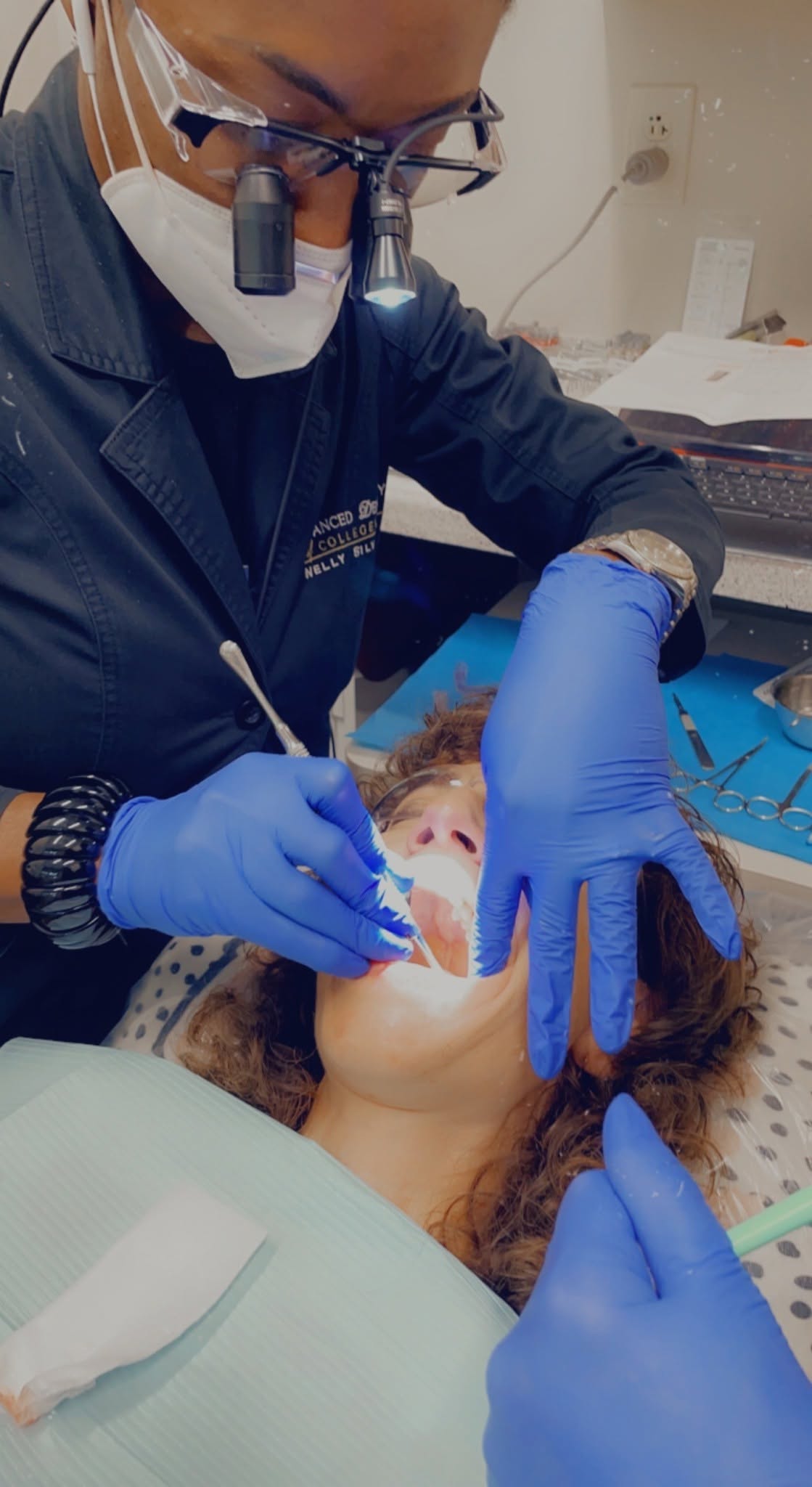
Dr. Nelly Silva finds the crack, shows you how deep it runs and repairs it in our office, from a bonded edge to a crown, root canal or implant.
 BeforeAfter
 BeforeAfter
 BeforeAfter
 BeforeAfter
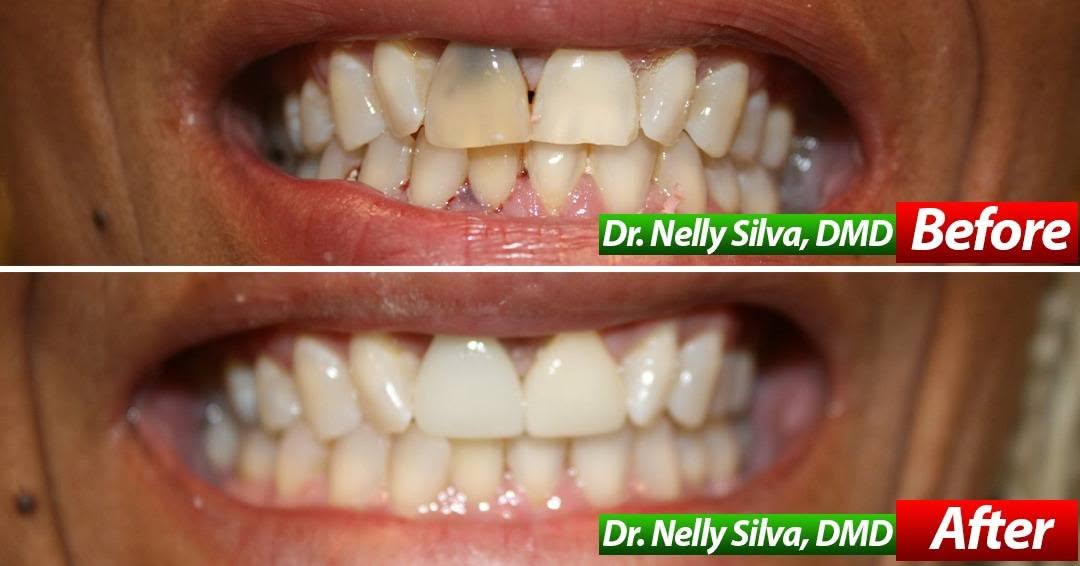
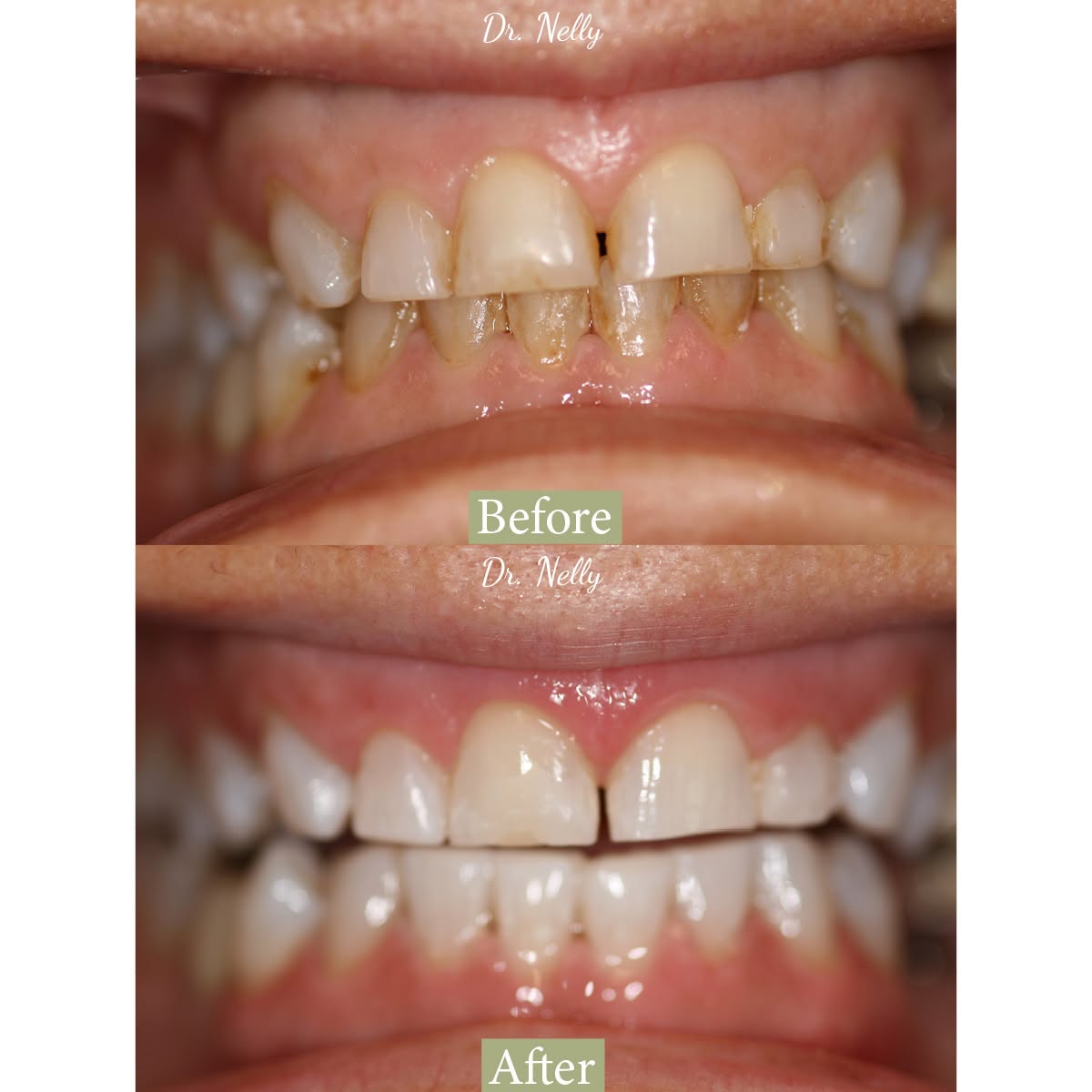
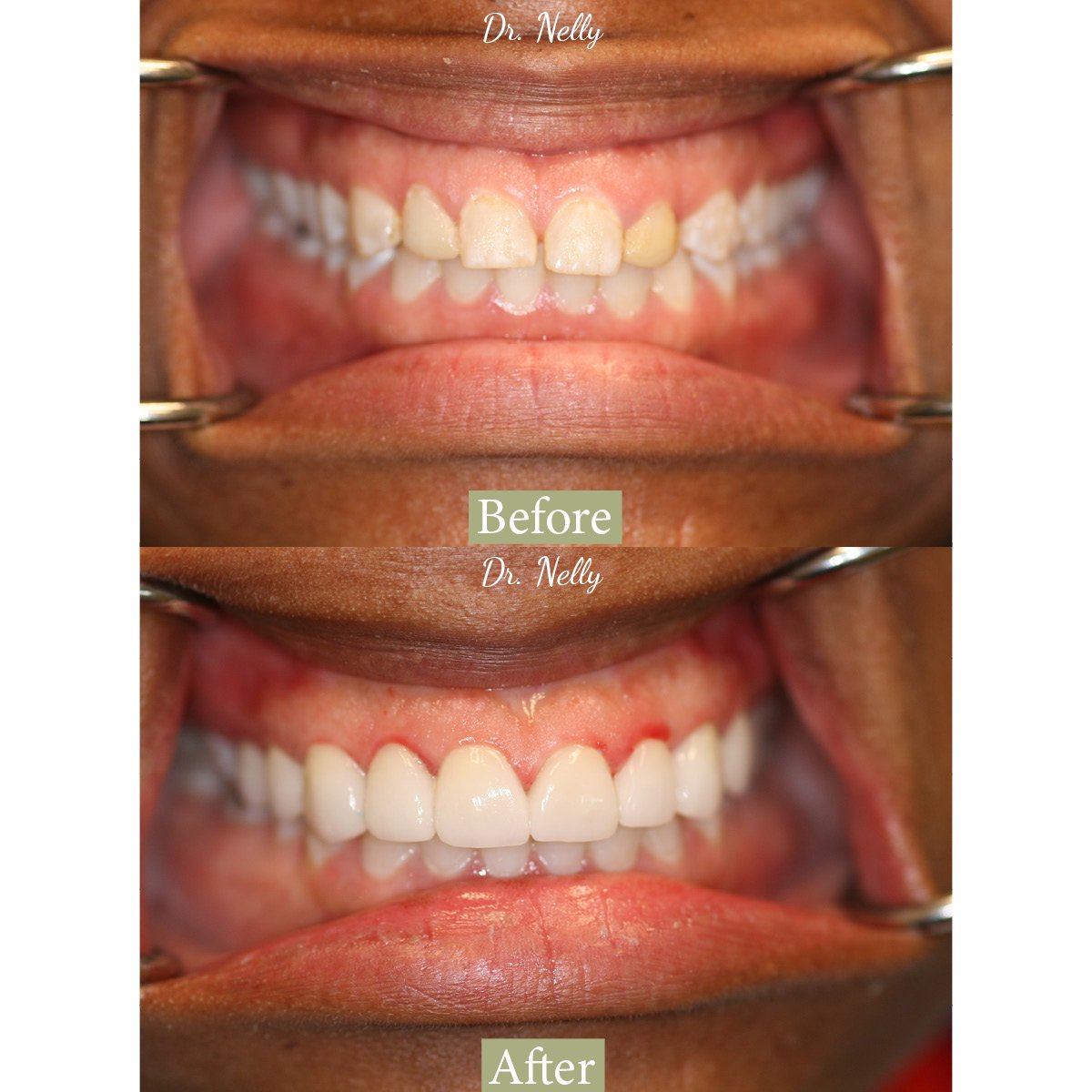
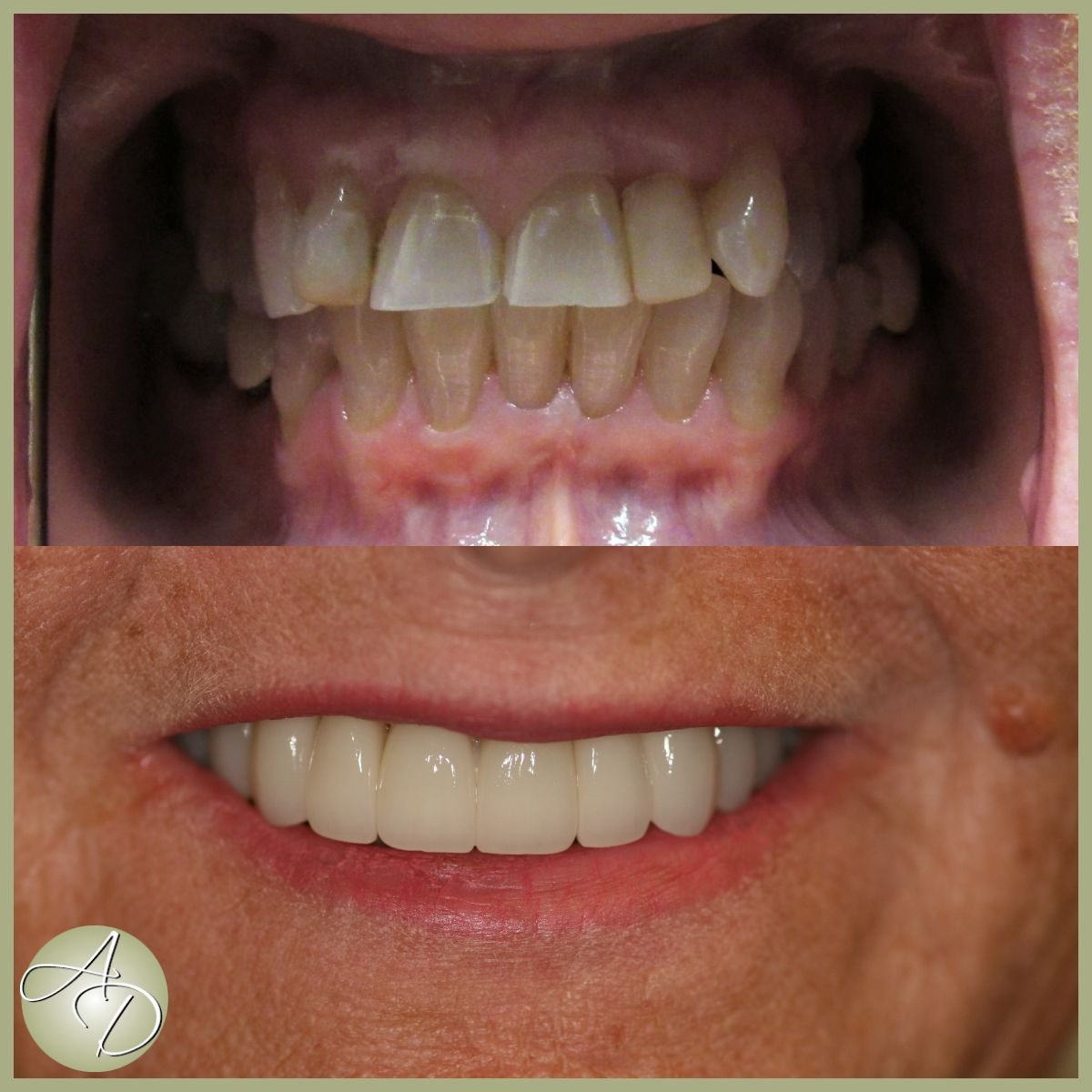
Each of these patients came to us with chipped, worn or broken-down teeth. Dr. Silva matched the repair to how much healthy tooth was left, so some needed only the edges rebuilt and others needed full coverage.
Results depend on your own teeth and bite, and we show you what is realistic before treatment starts.
A broken tooth rarely needs the emergency room, but it should be seen soon. These steps protect the tooth until we can examine it.
Go to an emergency room first if your jaw may be broken, bleeding will not stop, or swelling makes it hard to breathe or swallow.
Where the crack runs decides the repair. A crack that stays in the enamel is mostly cosmetic, while one that reaches the nerve or root needs more.
| Type | What You Notice | Usual Repair |
|---|---|---|
| Craze Lines | Fine surface lines in the enamel, with no pain | Often nothing; polishing or bonding if the lines bother you |
| Chipped Tooth | A missing corner or edge, sometimes with a sharp spot | Smoothing or tooth-colored bonding; a veneer for a larger chip on a front tooth |
| Fractured Cusp | A chewing point of a back tooth breaks off, often next to an old filling | A filling, onlay or crown that rebuilds the missing cusp |
| Cracked Tooth | Sharp pain when you bite or release, and sensitivity to cold | A crown to hold the tooth together; a root canal first if the nerve is affected |
| Split Tooth or Root Fracture | The tooth separates into pieces, or a crack starting in the root causes swelling or a gum bump | Part of the tooth can sometimes be saved; often extraction and an implant or bridge |
Cracks in back teeth are often invisible to the eye, which is why a tooth can hurt on and off for weeks before the cause is found.
We start with the most conservative repair that will last. A crack caught early usually needs less work than one left to spread.
Tooth-colored resin is shaped over a chip and hardened with a light. Most small chips are repaired in a single visit.
A broken corner is rebuilt with a filling. When more of the chewing surface is gone, an onlay covers it and braces the tooth.
A crown caps a cracked tooth so the crack cannot flex open when you chew. Our iTero Element scanner records the impression digitally.
When a crack reaches the nerve, Dr. Silva cleans and seals the canals, then crowns the tooth. Root canals are done in our office.
A tooth split below the gum line usually cannot be saved. We remove it and plan an implant, bridge or partial denture.
When a tooth breaks off at the gum line, Dr. Michael Strassberg, who provides periodontal care in our office, can perform crown lengthening to expose enough healthy tooth to hold a crown.
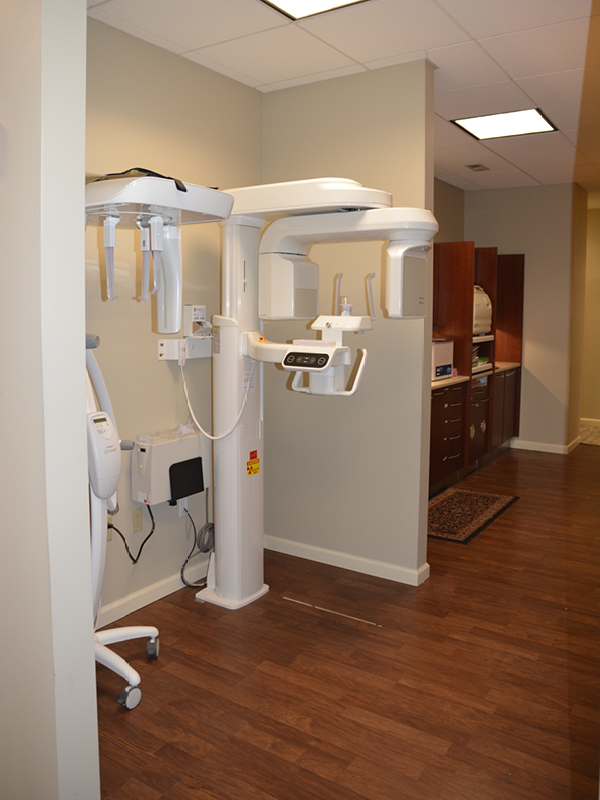
Many cracks hide between teeth or under old fillings and do not show on a standard X-ray. Dr. Silva combines what you tell us about the pain with a close exam under magnification and the tools below.
Cracks build up from years of chewing force as often as from a single accident. Knowing the cause helps keep a repaired tooth, and the teeth around it, from breaking again.
Nighttime grinding loads teeth far beyond normal chewing and is a common reason back teeth crack.
Ice, popcorn kernels, hard candy, pens and opening packages with your teeth all chip enamel.
A big filling leaves thin walls of tooth around it that can split under pressure.
A blow to the mouth chips front teeth. A custom sports guard absorbs much of that force.
A root canal treated tooth is more brittle, so we usually protect it with a crown.
When a few teeth take most of the force, those teeth wear and crack first.
Dr. Silva completed a TMD Residency with the American Academy of Craniofacial Pain and is a Fellow of the Academy. When your teeth show grinding wear, we assess your bite and jaw muscles with TENS and K7.
A custom habit appliance worn at night then protects your repair and your natural teeth.

Dr. Silva plans and performs your repair herself, from bonding to root canals, crowns and implants. Her postgraduate training at the Las Vegas Institute for Advanced Dental Studies covered aesthetic and neuromuscular dentistry, so a repaired tooth is matched to its neighbors and to your bite. She asks patients to call her Nelly.
★★★★★So grateful I was able to be seen same day when I called today with a broken tooth. Dr. Nelly was so kind, professional, explained everything and put in process a plan for my teeth.
Kristen K., Google Review
★★★★★I've been so scared but her team made me feel so welcome.
Gladys T., Google Review
Cost follows the repair your tooth needs, and a bonded chip costs far less than a root canal and crown. We confirm the plan and your estimate before any work starts.
We accept all PPO dental insurance plans. Coverage varies by plan, and we review your benefits with your estimate. We do not accept Medicaid.
Payment plans spread the cost over time, which helps when a crown or implant follows an urgent repair.
Patients without dental insurance can join our dental savings plan.
Anything not covered here, ask us at your visit.
For a small chip, polishing or bonding is usually the least involved repair and is often finished in one visit. Pulling a broken tooth can cost less on the day, but replacing it later with an implant or bridge usually costs more than saving it. We show you each option with its estimate so you can compare.
We check how much tooth is left, whether the nerve is exposed and whether the crack runs into the root. A small piece is rebuilt with bonding or a filling, a larger break gets an onlay or crown, and an exposed nerve needs a root canal first. Bring the broken piece with you if you have it.
A tiny chip with no sharp edge and no pain may only need smoothing. It is still worth having it checked, because a chip can hide a crack that grows each time you chew. A sharp edge can also cut your tongue or cheek.
There is no safe waiting period. Cracks do not heal on their own, and every bite can push a crack deeper toward the nerve or root. A crack found early usually needs a smaller repair, so book a visit as soon as you notice pain on biting or new sensitivity.
When you bite, the crack flexes open, and when you release, it closes and irritates the nerve. That is why pain on release and sensitivity to cold come and go. It is also why a crack can be hard to find without a bite test.
Most cracks that stay above the gum line can be saved with a crown, sometimes after a root canal. A tooth split into separate pieces or cracked in the root usually cannot. We use our Vatech CT scanner when we need to see how far a crack extends.
We numb the area with The Wand, which delivers anesthetic gradually rather than all at once. Conscious sedation is available for patients who feel anxious. Smoothing or bonding a small chip often needs no numbing at all.
The sooner we see a crack or break, the more of your natural tooth we can usually keep. You leave your visit knowing how far the damage goes and every option for repairing it.
399 Arcola Road, Collegeville, PA 19426