Dr. Nelly Silva completed a two-year orthodontic post-training program and plans every straightening case on iTero 3D scans, so your options are measured against your actual teeth and bite.
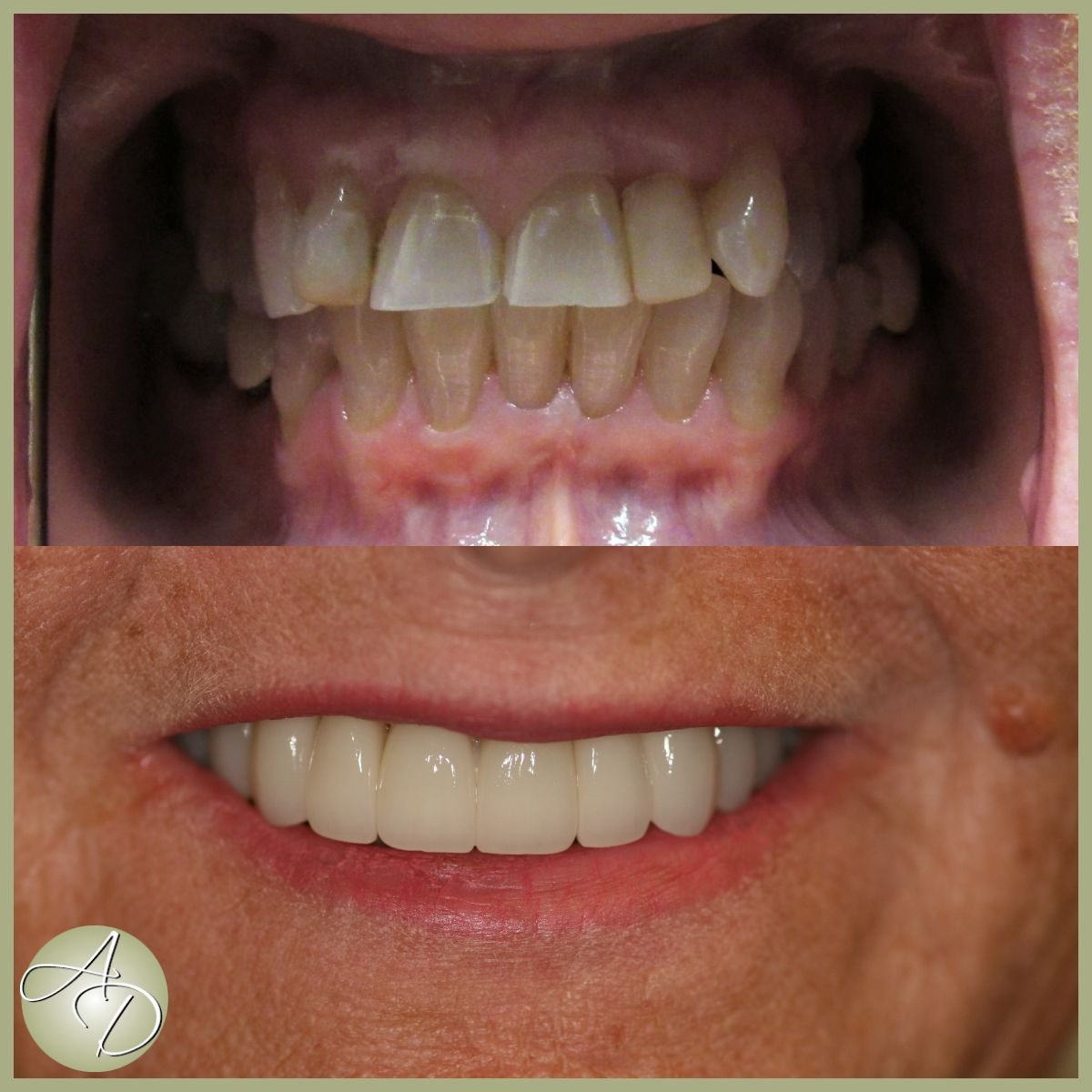
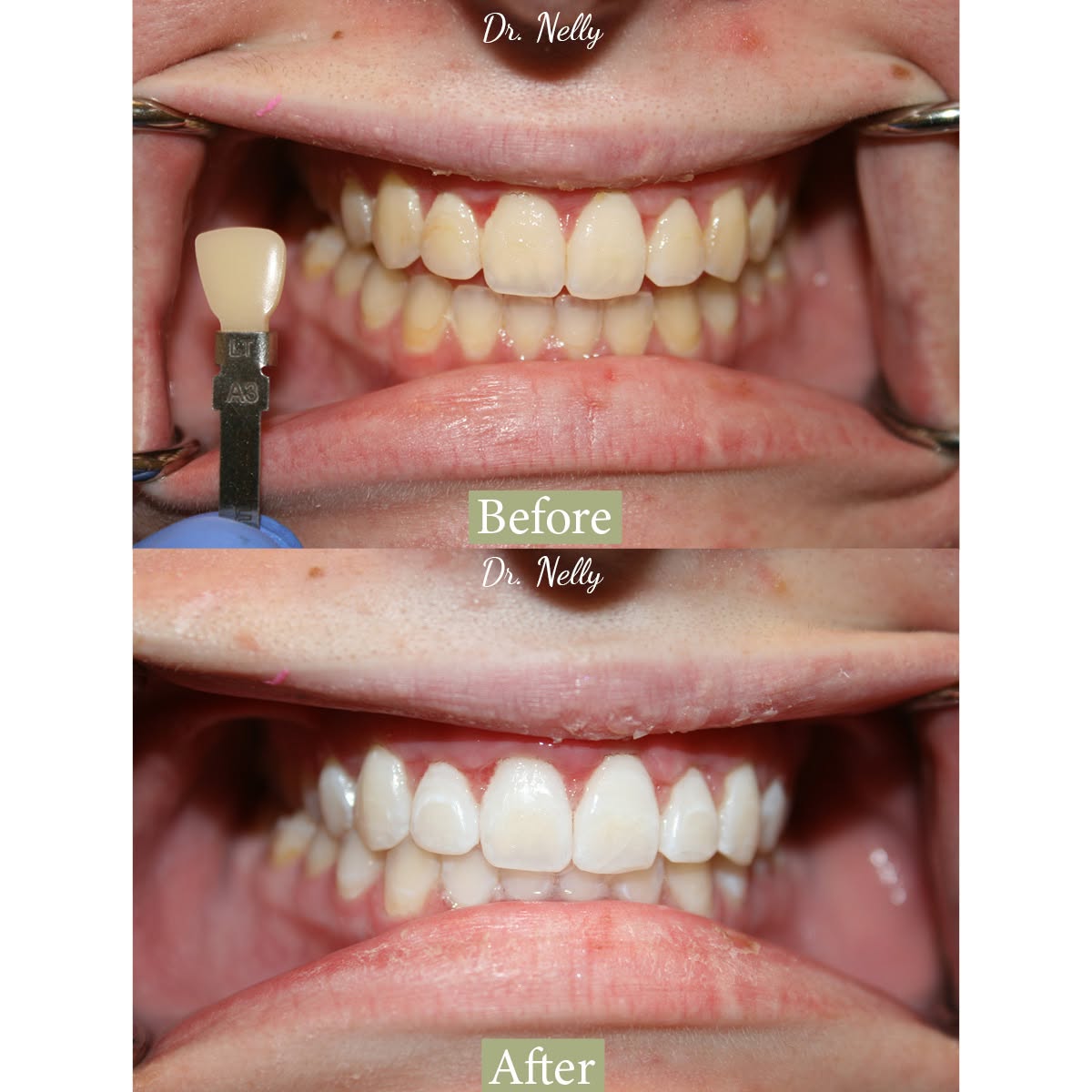
These are Dr. Silva's own patients. Each started with front teeth that were crooked, uneven or gapped, and each was corrected with porcelain veneers or restorations planned to the patient's bite. Aligner cases move the teeth themselves; veneer cases reshape how they line up.

Crooked teeth are a health question as much as a cosmetic one. Overlapping and rotated teeth leave tight corners that a brush and floss cannot fully reach, so plaque stays behind. An uneven bite also puts extra force on some teeth and on the jaw joints.
If any of these sound familiar, an exam shows whether the cause is the teeth, the gums or the bite.
The right fix depends on the cause. These are the patterns we see most, and how we handle each one here.
When the jaw is small for the size of the teeth, they overlap and twist as they come in. Clear aligners can gently make space and line them back up.
Thumb sucking, a tongue thrust and mouth breathing push growing teeth forward. Our habit appliances help children break the habit while the jaw is still developing.
A lost tooth leaves a gap that neighboring teeth tip into over time. Replacing it, or straightening first, stops the drift.
Gum disease weakens the bone holding teeth in place, so they fan out or spread. Our periodontist, Dr. Michael Strassberg, treats the gums before any teeth are moved.
Clenching and an uneven bite load certain teeth until they shift. Dr. Silva's TMJ training lets her treat the jaw and the alignment together.
Teeth keep moving throughout life, and lower front teeth often crowd first. Skipping a retainer after braces speeds this up.
Most crooked teeth can be corrected without brackets and wires. The table shows where each option fits; your exam narrows it to one.
| Option | Good fit for | How it works | Time frame |
|---|---|---|---|
| Invisalign Clear Aligners | Teens and adults with crowding, gaps, rotated teeth and many bite problems | A series of custom clear trays, designed from your iTero scan, moves teeth in small planned steps. You remove them to eat and brush. | Set by how far teeth need to move; mild cases are usually shorter |
| Porcelain Veneers | Front teeth that are slightly crooked, chipped or uneven when the bite is healthy | Thin custom shells bonded to the front of the teeth change their shape and line. The teeth themselves do not move. | Usually a few visits |
| Habit Appliances | Children whose thumb sucking or tongue habits are pushing teeth out of line | A small custom appliance removes the habit so the teeth and jaw can develop without that pressure. | Depends on the habit and the child's growth |
| Orthodontic or Surgical Care | Severe crowding or jaws that are mismatched in size or position | Traditional orthodontics, sometimes combined with jaw surgery, corrects the skeletal cause. We explain this route clearly if your scans point to it. | Longer, planned with the specialist team |
Moving teeth safely means knowing the roots, the bone and the bite, not only what shows when you smile. These are the tools we use to plan your case.
A digital 3D scan of your teeth replaces putty impressions and becomes the blueprint for aligner trays.
3D imaging shows root position and bone support before any tooth is moved.
Measures jaw muscle activity and how your teeth meet, so the new alignment suits your bite.
Computer-guided anesthesia delivery for veneer preparation and other work that needs numbing.

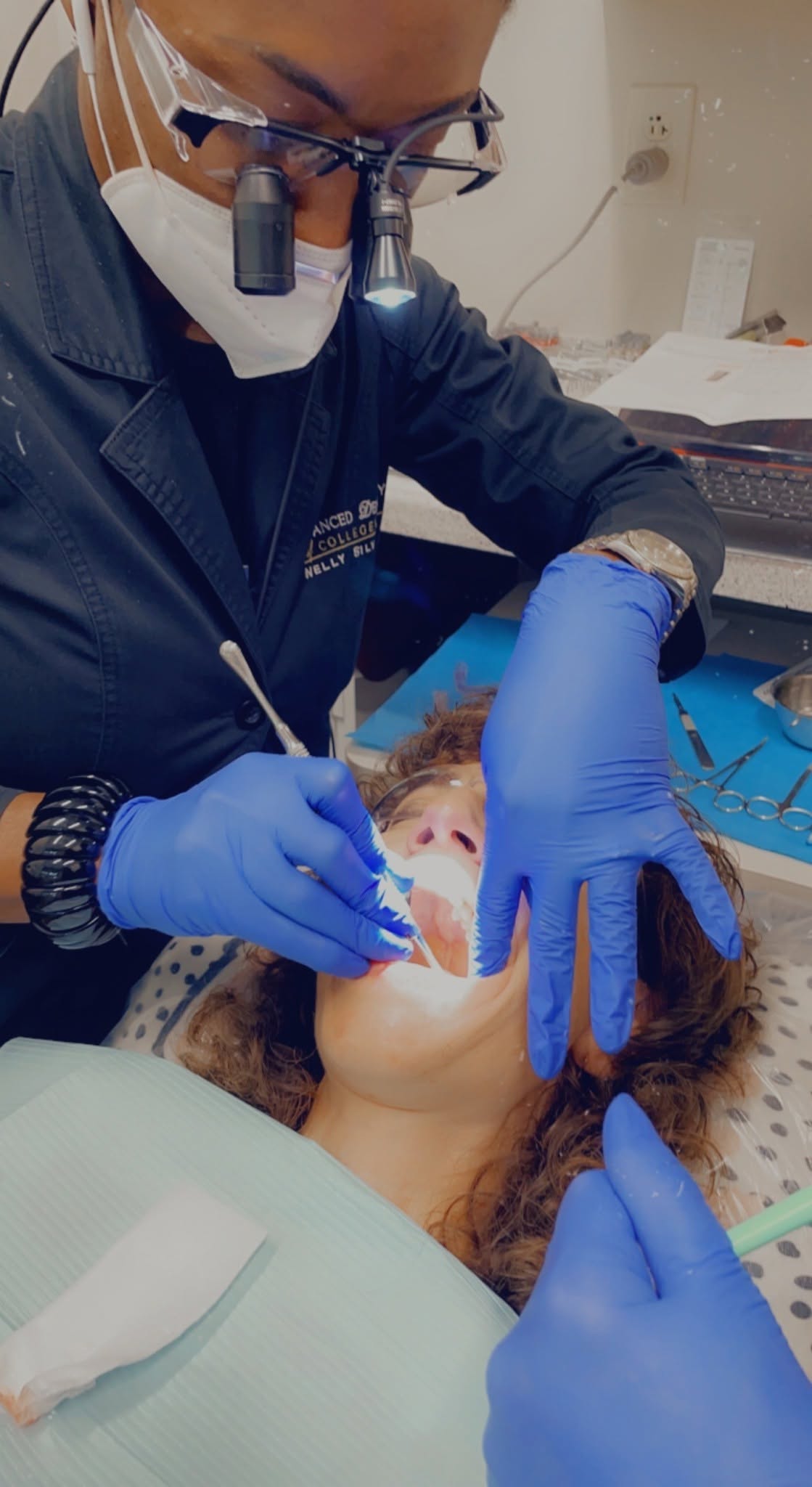
Straightening teeth changes how they meet. Dr. Silva's training in orthodontics, neuromuscular dentistry and jaw pain means your plan accounts for your bite and jaw joints, not only the six teeth that show. She also teaches at Temple, and she asks patients to call her Nelly.
Dr. Nelly was so kind, professional, explained everything and put in process a plan for my teeth. I get a little anxious at the dentist and Dr. Nelly put me at ease.Kristen K., Google review
They go over everything about what they see and offer what is needed to keep your teeth and gums to be healthy and stay healthy.Coleman Family, Google review
We check your teeth, gums and bite, then take an iTero scan and any imaging your case needs.
Dr. Silva walks you through what will work for your teeth, how long each option takes and what it costs.
Aligner patients switch to each new set of trays on schedule with check-ins here. Veneer patients finish in a few visits.
Teeth try to drift back, so a retainer and regular cleanings protect the result for the long term.
Cost depends on the option you choose and how far your teeth need to move, so we give you exact figures after your exam. Some PPO plans include orthodontic benefits, and we can check yours before you decide.
We are in network with all PPO dental insurance plans. We do not accept Medicaid.
Spread the cost of treatment over time with a payment plan.
No insurance? Our dental savings plan is an option for patients without coverage.
Yes, for many adults and teens. Invisalign clear aligners move teeth with a series of removable trays rather than brackets and wires. When teeth are only slightly out of line and the bite is healthy, porcelain veneers can make the front teeth look straight without moving them at all.
Surgery is only needed when the jaws themselves are mismatched in size or position, which teeth-moving treatment alone cannot correct. Most crooked teeth come from crowding or drifting and respond to aligners or orthodontics. Your exam and 3D imaging show which group you are in, and we explain the specialist route if you need it.
They can be. Overlapping teeth form tight corners where plaque collects, which raises the risk of decay and gum disease. A misaligned bite can also chip or wear certain teeth faster and strain the jaw muscles and joints.
There is no upper age limit for moving teeth. What matters is that the gums and supporting bone are healthy. If they need attention first, our periodontist, Dr. Michael Strassberg, can treat them before straightening begins.
Teeth keep shifting slowly throughout life, and lower front teeth often crowd first. Losing a tooth, gum disease, grinding and not wearing a retainer after braces all speed this up. Catching it early usually means a simpler fix.
It depends on your plan. Some PPO plans include orthodontic benefits, while veneers are often treated as cosmetic. We are in network with all PPO dental plans and can check your benefits, and we offer payment plans and a dental savings plan for patients without coverage.
Bring it up at your child's regular checkup as soon as you notice crowding or a habit such as thumb sucking. Some problems are easier to guide while the jaw is still growing. Our pediatric dentistry includes habit appliances for exactly these cases.
One visit with a 3D scan tells you which option fits your teeth, how long it takes and what it costs. Then you decide.
399 Arcola Road, Collegeville, PA 19426