Dr. Nelly Silva repairs damaged back teeth with custom inlays and onlays that keep more of your natural tooth than a crown.
Inlays and onlays are custom restorations made outside the mouth from an exact record of your tooth, then bonded in place. Made to fit, each one seals tightly and helps hold the remaining tooth together.
Fills a cavity or old filling between the raised points, or cusps, of a back tooth.
Rebuilds a cusp lost to decay or a crack. Often called a partial crown.
Materials. Options include porcelain or ceramic, composite resin and gold. Dr. Silva recommends one based on the tooth, your bite and how visible it is.
The right repair depends on how much healthy tooth is left. Dr. Silva chooses the most conservative option that will hold up to chewing.
| Option | How it is made | Natural tooth kept | Used for |
|---|---|---|---|
| Filling | Shaped in the tooth | The most | Small cavities |
| Inlay | Custom made, then bonded | Cusps stay intact | Larger damage inside the cusps |
| Onlay | Custom made, then bonded | Healthy cusps stay | Damage that reaches a cusp |
| Crown | Custom made, covers the tooth | The least | Extensive damage |
An inlay or onlay fits damage too large for a filling to stay strong, when a crown would remove more tooth than needed.
If too little tooth remains, a crown is usually stronger, and we will explain why.
We examine the tooth, take X‑rays and confirm which option fits.
Once you are numb, Dr. Silva removes decay or the old filling and shapes the tooth.
We record the tooth's shape and place a temporary while yours is made.
We check the fit and your bite, then bond and polish the restoration.
Afterward, brush and floss as usual and keep your regular cleanings so we can check its edges.
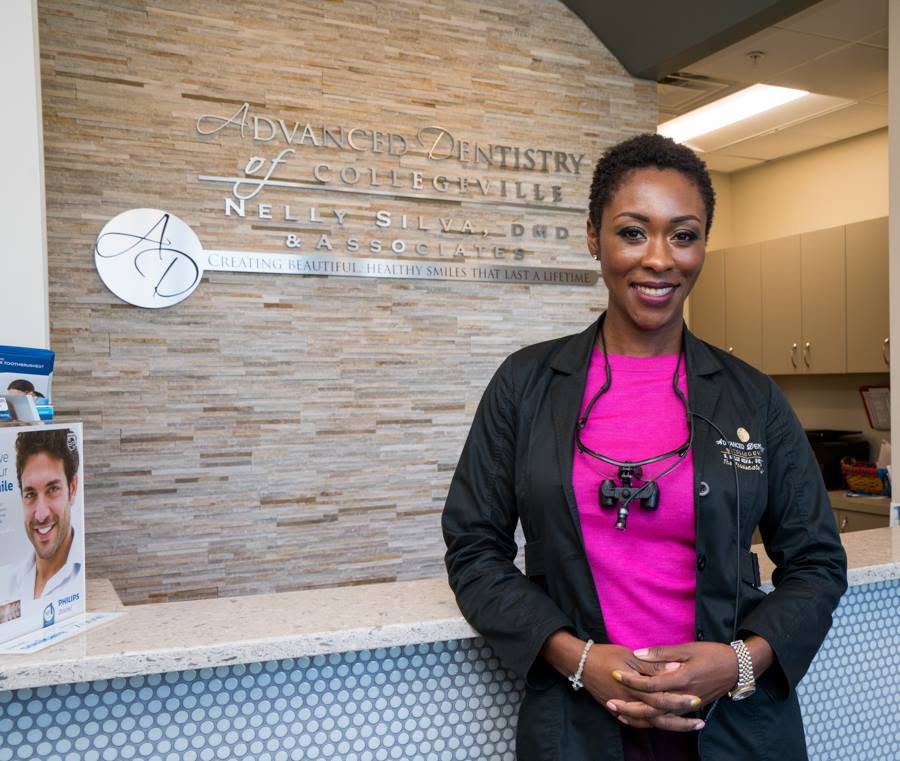
Dr. Nelly Silva earned her DMD at Temple University's Kornberg School of Dentistry, where she now teaches as a Clinical Associate Professor. Her postgraduate training includes neuromuscular dentistry, the study of how the bite and jaw work together.
She invites patients to call her Nelly.
"Very professional and welcoming. Takes time for questions and gives detailed explanations."
Lynn Maison, Google Review
"The positive energy, professionalism, modern tools and techniques, and personal touch all keep me and my family coming back."
Steven Meyers, Google Review
Cost depends on the tooth, its size and the material. We review it with you before treatment.
We accept all PPO dental insurance plans. Medicaid is not accepted.
Payment plans let you spread the cost of treatment over time.
Patients without insurance can join our dental savings plan.
It depends on the tooth, the material and whether you need an inlay or an onlay. PPO plans, payment plans and our savings plan can all help.
For larger cavities, often yes: an inlay is made to fit and bonded in, so it seals tightly. For a small cavity, a filling is the simpler choice.
With good home care and checkups, a well-fitted one can serve you for many years. Grinding and chewing ice shorten the life of any restoration.
The tooth is numbed first with The Wand, a computer-guided anesthetic system. Conscious sedation is available for anxious patients.
Book a visit with Dr. Silva to see whether an inlay or onlay suits your tooth.